
RTT’s Ultimate Custom Spray Booth Design Challenge #3

Large industrial paint booth or finishing enclosure with a multi-level scaffold structure surrounding a large fabricated component inside a high-ceiling manufacturing facility.

Spray booth Design challenge:
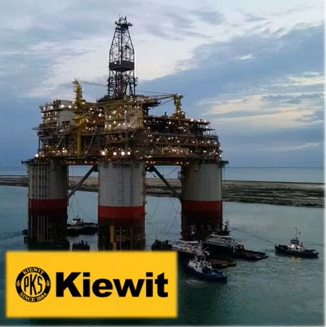
Kiewet Corporation, one of North America’s largest and most respected engineering and construction organizations, needed large scale parts needed to be blasted and coated without being moved. Once blasting began, the coating process would follow 5 days later, requiring a humidity and temperature controlled environment to minimize flash rusting.

Offshore oil platform operated by Kiewit standing in coastal waters, illuminated at dusk with support vessels surrounding the structure.

RTT Solution: Custom 135’w x 60’h x 193’d MegaBooth

This booth required a 2-in-1; a temperature and humidity-controlled spray and blast booth. RTT created a MegaBooth designed for blast and paint modes along with temperature and humidity controls. We had dedicated recirculation fans, exhaust fans, dust collectors, and water chilled AMUs to supply air to the booth and allow for crossflow air movement. Weighted curtains allowed the booth to be sectioned off into 3 independent zones with 24,000 lumen LED fixtures in each zone. The location of the booth required the design to withstand hurricane force winds. This was tested by hurricane Harvey in 2017, which resulted in no damage to the spray booth.

3D engineering drawing of a large industrial paint booth system showing structural framing, exhaust plenum sections, access platforms, and equipment layout.

Why is a spray booth required?

  • A spray booth is needed to confine and evacuate atomized particulate and vapors within a restricted environment.
  • Prevent overspray and volatiles from migrating and causing unsafe conditions or contamination outside of the designated spray area
  • Provide a clean environment in which to paint and minimize contamination in the coated product
  • Prevents a combustible combination of flammable vapors and air
  • Required by OSHA and NFPA

A spray booth consists of:

  • A work area/compartment where spraying takes place
  • An exhaust chamber with filter media for collecting particulate
  • An exhaust fan and motor ducted to the exterior of the building
  • A spray booth can be open face, enclosed, or pressurized


Spray booths are typically designed by the direction of the airflow. 


Crossdraft booths intake air through filters in the product doors. The clean, filtered air is drawn through the booth and exhausted through a filter system at the opposite end.


Downdraft booths take in fresh air from the cleaner upper levels of the shop through a filtered booth ceiling. The filtered air is drawn down and away from the product into the filtered exhaust pit located in the floor.


Side Downdraft booths intake air from the cleaner upper levels of the shop through a filtered booth ceiling. The filtered air is drawn down and away from the product through exhaust filters at the floor level, along both sides.


Modified Downdraft booths intake fresh air from the cleaner upper levels of the shop through a filter bank located in the booth ceiling, near the product doors. The filtered air is drawn down through the booth to an exhaust filter system at the opposite end.

Illustration of a crossdraft paint booth airflow system showing fresh air entering horizontally through the front opening, moving across the work area, and exiting through an exhaust stack located at the rear of the booth. Illustration of a downdraft paint booth airflow system showing clean air entering from the ceiling and moving vertically downward through the work area. Illustration of a modified downdraft paint booth airflow system showing filtered air entering from the front intake area, moving horizontally through the booth, and then being directed toward a rear exhaust chamber. Arrows indicate airflow traveling across the work area before being pulled into the exhaust section and discharged upward through a vertical exhaust stack. Illustration of a side downdraft paint booth airflow system showing clean air entering from the ceiling and moving downward through the spray area. Airflow is directed toward exhaust chambers located along both side walls, where contaminants are captured and exhausted through vertical stacks.

Some quick highlights that we use to design our spray booths that are determined by OSHA and NFPA:

  • Shall not be less than 100 linear feet per minute
  • Electrostatic spraying may not be conducted at not less than 60 linear feet per minute
  • The required airflow velocities range from 50-250 linear foot per minute (FPM) into the openings of a spray booth
  • Dilute solvent vapor to at least 25 percent of the lower explosive limit
  • The concentration of the vapors and mists in the exhaust stream of the ventilation system shall not exceed 25 percent of the lower flammable limit

RTT Standard Designs:

We offer a wide range of standard booths that are pre-engineered, or “-S” booths. These booths have been drawn, detailed, the established customer packet has been set, and can typically be delivered within 10 days of ordering.

Comparison chart of three industrial paint booth construction options—Standard Duty, Heavy Duty, and Xtreme Duty.
RTT Finishing Solutions