Trucking
Spray Painting and Powder Coating in the Trucking and Transportation Industry
A Class 8 semi-truck operating in long-haul service accumulates somewhere between 100,000 and 150,000 miles per year. Over a working life of ten to fifteen years, that machine travels between one and two million miles — through mountain passes glazed with road salt and brine, across desert highways baking under summer sun at temperatures that peel inadequate coatings from steel and aluminum in a single season, through the chemical soup of urban traffic and industrial corridors, and into loading docks and distribution centers whose forklift traffic and cargo handling routinely abuses vehicle bodies in ways that no coating system absorbs without consequence. The finish on a commercial truck is not decorative. It is the front line of a continuous battle against corrosion, abrasion, chemical attack, UV degradation, and mechanical damage that determines whether the asset underneath it maintains its structural integrity and commercial value for a decade or more — or deteriorates prematurely into costly repairs and early retirement.
Trucking and transportation coating operations are correspondingly demanding and correspondingly diverse. At the OEM level, major truck and trailer manufacturers operate sophisticated production finishing facilities that apply multi-coat protective and decorative systems to vehicle bodies, chassis, and components on production lines designed for maximum throughput and minimum material waste. At the fleet maintenance level, regional maintenance shops and national fleet service centers perform scheduled repaints, DOT-required marking updates, accident repair refinishing, and corrosion remediation on vehicles that range from lightly used regional delivery units to heavily worn long-haul tractors returning for mid-life refurbishment. At the specialized end of the market, custom graphics and fleet livery painters apply elaborate multi-color decorative schemes to transport refrigerated trailers, tanker trucks, and customer-branded delivery fleets using spray techniques that require both finishing skill and the full protective equipment of professional refinishing operations.
This article examines the spray painting and powder coating processes used across the trucking and transportation finishing industry, the engineering controls that manage the airborne hazards those processes generate, the health risks faced by workers in this sector, and the regulatory framework that governs commercial vehicle finishing from OEM production through fleet maintenance to end-of-life refurbishment.
The Commercial Vehicle Finishing Environment: Scale, Diversity, and Service Demands
Commercial vehicle finishing is defined by the intersection of industrial scale and extreme service demands. Unlike automotive refinishing, where the goal is primarily cosmetic restoration within a relatively benign suburban service environment, commercial vehicle coating must deliver multi-year corrosion protection and appearance retention across service conditions that would rapidly destroy inadequate systems. Road salt applied to northern highways from October through April creates a continuous electrochemical attack on chassis steel. Tanker trailers carrying food-grade liquid products, petroleum fuels, or chemical commodities require interior lining systems that protect both the cargo and the tank structure from contamination and corrosion simultaneously. Refrigerated trailers operating in continuous freeze-thaw cycles across North American distribution networks experience coating stress from thermal expansion and contraction that demands flexibility as well as adhesion from their protective systems.
The commercial vehicle finishing industry encompasses several distinct operational segments, each with its own coating requirements and hazard profile. OEM truck and trailer manufacturing — concentrated in facilities operated by Peterbilt, Kenworth, Freightliner, International, Volvo, and their trailer counterparts Wabash National, Great Dane, and Utility Trailer — represents the highest-volume and most systematically engineered segment of the market. Fleet maintenance painting — performed at private fleet maintenance facilities, truck dealer service centers, and independent truck body shops — represents the broadest and most variable segment in terms of facility quality, equipment capability, and safety management sophistication. Specialty transportation finishing — including food tank lining, hazardous materials placard painting, DOT marking application, and custom fleet livery — occupies a distinct niche with its own technical and regulatory requirements.
The geographic footprint of commercial vehicle finishing operations follows the distribution of trucking activity itself — concentrated in major freight corridors and logistics hubs but present in some form in every region of the country, including many locations where the professional finishing infrastructure and regulatory oversight density are significantly lower than in urban manufacturing centers. A fleet maintenance painting operation at a truck terminal in rural Oklahoma or a trailer repair shop in a Wyoming freight depot operates in the same regulatory framework as a major OEM finishing line in Indiana — but with profoundly different resources, oversight, and professional safety management infrastructure to bring to the compliance challenge.
Commercial Vehicle Coating Systems and Their Chemistry
Chassis and Frame Primer Systems
The chassis and frame of a commercial truck represent the highest-consequence corrosion protection application in the vehicle: structural steel whose integrity is critical to the safety of the vehicle, its cargo, and every road user sharing the highway with it. Frame rail coating failure enabling advanced corrosion of a cross-member or bracket is not merely a cosmetic defect — it can progress to structural compromise with catastrophic potential. This stakes level drives conservative coating specifications at the OEM level, typically consisting of abrasive blast cleaning of frame components to near-white metal cleanliness followed by electrocoat or two-component epoxy primer application providing 100 to 200 microns of corrosion protection film build.
Cathodic electrocoat primer — the same foundational technology used in automotive body-in-white priming — is applied to cab structures and sheet metal components at major OEM facilities, providing uniform corrosion protection across all surfaces including interior cavities and welded assemblies that spray application cannot reach. For chassis rails and structural steel components that are too large or geometrically incompatible with e-coat immersion, two-component epoxy primer applied by airless spray provides the corrosion protection performance needed for frame rail service life specifications.
Wax injection into enclosed structural cavities — box section chassis rails, door pillars, and rocker panels on cab structures — provides supplemental corrosion protection in areas where applied film thickness cannot be verified by conventional inspection. The petroleum wax compounds used for cavity injection are relatively low-hazard materials, but their spray application into enclosed cavities requires attention to vapor accumulation in the injection space during application.
Cab and Body Topcoat Systems
Commercial truck cab exterior topcoats are the most visible finishing element on any vehicle and carry both the brand identity of the truck manufacturer and the fleet livery of the operating carrier. Two-component aliphatic polyurethane topcoats are the OEM and fleet repaint standard for cab and sleeper exterior surfaces, delivering the combination of gloss retention, UV stability, and color durability that maintains vehicle appearance across a decade of highway service. The color range for commercial truck topcoats spans the full spectrum from the subtle — white and silver fleet vehicles that show every road deposit — to the spectacular: owner-operator trucks with custom airbrush artwork, metal-flake base colors, and graphic overlays that rival custom automotive show vehicles in their finishing complexity and time investment.
Fleet carrier livery coatings represent a distinct market segment within commercial vehicle topcoating. Major carriers — UPS, FedEx, Amazon Logistics, J.B. Hunt, Werner, and dozens of regional operations — maintain specific color specifications for their entire fleet and contract with fleet painting services to maintain livery consistency across vehicles added to or returned to service throughout the fleet lifecycle. Fleet livery painting often involves masking and multi-color application to achieve the specific graphic schemes that identify a carrier’s vehicles, requiring skilled spray technique alongside the standard isocyanate exposure management requirements of any two-component polyurethane topcoat application.
Single-component alkyd and acrylic enamel topcoats remain in use for trailer bodies, where the cost economics of painting large surface areas with lower-cost single-component materials are compelling, and where the demanding UV stability performance of two-component polyurethane is less critical because trailers are typically repainted on shorter cycles than power units. The lower performance and lower cost of single-component systems comes with somewhat lower isocyanate hazard — but not zero hazard, since some single-component urethane systems contain isocyanate prepolymers that react with atmospheric moisture and present respiratory sensitization risk during spray application.
Trailer Body and Floor Systems
Dry van trailer bodies present a coating challenge dominated by surface area scale. A standard 53-foot dry van trailer has exterior surface area exceeding 400 square meters — more than fourteen times the exterior surface of a passenger car. Exterior trailer body panels are typically aluminum or fiberglass composite construction, requiring coating systems specifically formulated for adhesion to these non-ferrous substrates rather than the steel-optimized epoxy primers that form the backbone of chassis coating systems. Two-component epoxy adhesion promoters or etch primers precede the exterior topcoat on aluminum trailer panels, providing the chemical bonding to the aluminum oxide surface layer that mechanical adhesion alone cannot achieve reliably in the thermal cycling environment of trailer service.
Trailer floor systems — typically hardwood laminated planks, aluminum extrusions, or composite floor panels — are coated with penetrating oil or wax finishes that preserve the structural integrity of wood floors while providing slip resistance and resistance to the chemical contamination of cargo loading. The forklift traffic, pallet jack operation, and cargo chemical exposure that trailer floors endure in normal service creates abrasion and impact demands that few conventional coating systems can sustain — which is why trailer floor coatings are typically functional penetrating treatments rather than surface film coatings that would crack and delaminate under working loads.
Tank Trailer Interior Lining Systems
Tanker trailer interior coatings are among the most demanding and specialized coating applications in any industry. The cargo determines the lining: food-grade tankers carrying milk, juice, and edible oil require FDA-compliant interior linings with no extractable compounds that could contaminate cargo; chemical tankers carrying acids, caustics, solvents, or specialty chemicals require linings specifically evaluated for resistance to the cargo chemistry; petroleum tankers carrying gasoline, diesel, and ethanol blends require linings resistant to aromatic hydrocarbon swelling and ethanol attack.
Two-component epoxy lining systems dominate food-grade tank interior applications, providing a smooth, cleanable surface with minimal extractable chemistry that meets FDA food contact material requirements. Solvent-free epoxy formulations — which use reactive diluents rather than volatile organic solvents to achieve spray-applicable viscosity — are preferred for interior tank lining to minimize solvent vapor accumulation in the confined space of the tank interior during application and curing. Chemical tanker linings may use rubber lining, glass-flake reinforced vinyl ester, or specialty thermoplastic coatings depending on the specific cargo chemistry. The application of any coating system inside a tank trailer represents a confined space entry with all the atmospheric hazard management requirements that confined space work in any industrial context entails — continuous ventilation, atmospheric monitoring, and supplied-air respiratory protection throughout the work period.
Refrigerated Trailer Exterior and Insulation Panel Systems
Refrigerated trailers — reefers — present specific coating challenges arising from the thermal cycling of their service environment. Exterior surfaces cycle continuously between the ambient temperatures of loading dock environments and highway driving conditions, while the interior surfaces experience controlled low temperatures that may extend to -20°C or below for frozen cargo service. Coating systems for refrigerated trailer exteriors must accommodate the differential thermal expansion between the aluminum or composite skin panels and the structural steel framing without inter-coat delamination or edge cracking at substrate transitions.
The insulation panels in refrigerated trailer walls — typically polyurethane foam bonded between interior and exterior skins — are assembled with adhesive systems whose chemical compatibility with the coating systems applied to the skins must be verified during system design. Polyurethane foam generates isocyanate vapors during its initial curing reaction after injection into the panel cavity — a consideration for workers in trailer panel assembly operations who may be exposed to MDI or polymeric MDI from panel manufacturing in addition to any isocyanate exposure from topcoat application operations.
Spray Painting Processes in Trucking and Transportation
OEM Production Line Application
Major truck and trailer OEM facilities use production line spray finishing systems designed for high throughput and material efficiency. Electrostatic spray systems — applying charged liquid coating droplets to grounded vehicle components — achieve transfer efficiencies of 80 to 90 percent on cab panels and sheet metal components, substantially reducing overspray generation compared to conventional spray at equivalent coating volumes. Robotic spray arms programmed with three-dimensional spray paths apply primer and topcoat layers to cab assemblies moving through the spray zone on overhead conveyors, maintaining consistent gun-to-surface distance and spray speed across the complex contoured surfaces of modern aerodynamic cab designs.
For chassis and frame components that cannot be finished on the cab production line, dedicated component spray lines apply primer by airless spray before final assembly. Frame rail coating at major OEM facilities may involve spray tunnel systems where frame components travel through an enclosed spray zone and emerge coated on all accessible surfaces in a single production pass. The throughput demands of frame production lines — processing hundreds of frame sets per day at major facilities — drive the use of fast-cure primer systems and, in some cases, infrared or convection cure ovens that accelerate primer dry times between application and assembly staging.
Fleet Repaint and Livery Application
Fleet repainting operations — whether at carrier-operated maintenance facilities, truck dealer service centers, or independent truck painting shops — use manual spray application with HVLP or conventional air spray guns for cab and sleeper unit repaints. The operational workflow of a commercial truck cab repaint closely parallels automotive collision repair in its sequencing: surface preparation by sanding and chemical cleaning, primer application, blocking and guide-coat sanding, topcoat application in the specified fleet color, and any graphic or livery masking and multi-color application required for the carrier’s livery scheme.
The critical difference from automotive refinishing is scale: a Class 8 tractor cab and 72-inch sleeper unit has exterior surface area several times that of a passenger car, requiring proportionally longer spray times per coat and correspondingly greater total exposure to topcoat aerosol for the painter performing the application. A painter applying two-component polyurethane topcoat to a full cab-and-sleeper repaint in a single spray session is exposed to isocyanate aerosol for a period that may be two to three times that of a typical automotive panel repaint, making the duration of continuous isocyanate exposure — and the cumulative sensitization risk — proportionally greater.
Trailer repaints present a further scale challenge: the sheer surface area of a 53-foot trailer exterior overwhelms most conventional spray booth infrastructure, and the practical reality of fleet trailer repainting is that it frequently occurs either in semi-enclosed outdoor spray areas or in purpose-built trailer spray buildings that enclose the full trailer length but operate with less sophisticated airflow control than purpose-designed downdraft booths. Some high-volume trailer repaint operations use spray machines — multiple-gun reciprocators mounted on traversing carriages that move along the trailer length — to apply large-area coatings efficiently, reducing the per-operator spray time while maintaining material consumption efficiency.
Airless Spray for Large Surface Areas and Underbody Work
Airless spray is the application method of choice for primer application on commercial vehicle chassis, frame components, and large body panels where the fluid delivery rate of airless equipment enables efficient high-build application across large surface areas. Underbody coating application — rubberized chassis protection compounds applied to frame rails, cross members, and suspension components — uses purpose-designed airless spray equipment with heavy-material tips capable of handling the high-viscosity rubberized compounds at appropriate film builds for impact and abrasion protection in the road environment.
The fine aerosol mist generated by airless spray at high hydraulic pressures creates higher airborne overspray concentrations than HVLP application of equivalent material volumes, emphasizing the importance of booth ventilation performance when airless spray is used for high-hazard materials including isocyanate-containing undercoats or chassis protection compounds containing aromatic hydrocarbon solvents.
Specialty Graphics and Custom Airbrush Work
Custom truck graphics — the ornate airbrush artwork, flames, portraits, and elaborate graphic schemes found on owner-operator trucks at truck shows and on high-profile branded fleet vehicles — represent a distinct sub-discipline of commercial vehicle finishing combining artistic skill with advanced spray technique. Custom truck graphics painters use a combination of HVLP spray guns for large-area color application, detail airbrushes for fine artwork and detail work, and spray-applied clearcoats — typically two-component polyurethane — to protect the graphic layers beneath.
The isocyanate exposure dimension of custom graphics work is particularly acute because these painters may work in environments that are less formally equipped than production fleet painting shops. An independent custom graphics artist working in a private shop may have a spray booth that meets minimum code requirements but lacks the supplied-air respirator program infrastructure of a large fleet painting operation. The artistic intensity of the work — which requires sustained concentration on the surface being painted rather than ongoing attention to protective equipment — creates a context where respiratory protection compliance tends to be less consistent than in production environments with direct supervisor oversight.
Powder Coating in Commercial Vehicle Applications
Component-Level Powder Coating at OEM Facilities
Powder coating is extensively used in commercial vehicle OEM manufacturing for components and subassemblies where the size and geometry of the parts is suited to electrostatic spray booth application and oven cure. Wheel and rim coating — applying corrosion-resistant and appearance-quality powder coating to steel and aluminum truck and trailer wheels — is one of the highest-volume commercial vehicle powder coating applications, driven by the corrosion protection demands of wheel service in road salt environments and the commercial value of maintaining wheel appearance on premium fleet and owner-operator vehicles. Fuel tank components, battery boxes, tool boxes, mudflap brackets, step assemblies, and a wide range of chassis hardware items are powder coated at OEM facilities and by aftermarket suppliers.
Chrome-look and bright-finish powder coating systems — metallized powder formulations that produce reflective surfaces approaching the appearance of electroplated chrome — have gained significant market share in commercial vehicle accessory markets as alternatives to electroplated chrome with lower environmental impact and cost. Chrome plating operations generate hexavalent chromium waste and air emissions subject to stringent EPA and OSHA regulation; chrome-look powder coating eliminates these Cr(VI) hazards while providing visually similar surface appearance for decorative components including bumpers, air cleaner housings, exhaust stacks, and mirror arms.
Wheel and Rim Refinishing
Truck wheel refinishing — stripping, repairing, and recoating steel and aluminum wheels from commercial vehicles — is a specialized segment of the transportation powder coating market served by independent wheel refinishing operations, truck accessory shops, and dealer service centers. The process involves chemical stripping or mechanical blasting of existing coating from the wheel, repair of minor damage, conversion coating pretreatment, and application of powder coating in the appropriate finish specification — bare aluminum clear powder for aluminum wheels, steel gray or black for steel wheels, or customer-specified colors for fleet-branded or custom applications.
Chemical stripping of wheels using caustic or acid-based strippers generates hazardous waste streams that require characterization and appropriate disposal. Aluminum wheels stripped with caustic sodium hydroxide solutions generate aluminum hydroxide sludge that must be managed as industrial waste. The stripping solutions themselves — which may contain heavy metal contamination from existing coatings stripped from multiple wheel types — require treatment or licensed disposal rather than drain discharge. Wheel refinishing operations should verify the hazardous waste classification of their stripping solution waste streams and establish compliant disposal procedures rather than assuming that diluted aqueous stripping waste can be discharged to the municipal sewer system.
Trailer Component Powder Coating
Trailer manufacturers and aftermarket trailer equipment suppliers use powder coating extensively for landing gear components, king pin assemblies, glad hand holders, light housing brackets, and other hardware items that benefit from powder coating’s corrosion resistance and impact resistance in the service environment of commercial trailer operation. The cargo contact surfaces of trailer interiors — decking hardware, tie-down rail components, and E-track fittings — are commonly powder coated with food-safe or cargo-compatible powder formulations where the coating may contact cargo directly.
Reefer trailer components present specific powder coating performance requirements: the thermal cycling of refrigerated service — from ambient temperatures during loading to operational temperatures below -20°C during frozen cargo transit — demands powder coating systems with verified adhesion and flexibility at low temperatures. Standard polyester powder coatings may lose flexibility at temperatures below -15°C, leading to micro-cracking that provides pathways for moisture intrusion and accelerated corrosion. Low-temperature flexible powder formulations, or two-coat systems with a flexible epoxy primer powder beneath the polyester topcoat, are specified for refrigerated trailer components where this thermal cycling occurs.
Specialized Coating Applications in Transportation
DOT Regulatory Marking and Placard Painting
Commercial vehicles operating on public highways in the United States are subject to Federal Motor Carrier Safety Administration (FMCSA) and Department of Transportation (DOT) marking requirements that mandate specific identification markings on vehicle exteriors. USDOT numbers, carrier names, and operating authority designations must be applied to power units in specified sizes, fonts, and contrast levels. Hazardous materials transport vehicles must display specific placard holders and, when loaded with regulated hazardous materials, the appropriate placard for the commodity being transported. Oversize and overweight transport vehicles require additional markings and banner configurations specified by state permit authorities.
DOT marking application — whether by paint spray, vinyl decal, or reflective sheeting — is a routine maintenance activity at fleet operations that must be managed for both compliance accuracy and material hazard. Spray-applied DOT marking paints use materials ranging from single-component latex to high-contrast retroreflective paints with specific optical properties; the material and application method selected determines the hazard profile of the marking application process. High-contrast retroreflective paints may contain glass microspheres and specialty pigments requiring respiratory protection during spray application beyond what the base paint chemistry alone would require.
Hazardous Materials and Food-Grade Tanker Lining
Tank trailer interior lining is among the most technically demanding and occupationally hazardous coating operations in the transportation industry. Applying solvent-free epoxy lining systems inside the confined space of a food-grade tanker, or brush-applying rubber lining to the interior of a chemical tanker, requires workers to perform detailed application work in an enclosed vessel with limited access, continuous ventilation requirements, and air quality demands governed by both the coating chemistry and the residual cargo contaminants from the tank’s previous service.
Food-grade tank lining operations require cleaning the tank to food-grade sanitary standards before lining application — a process using hot water, detergents, and sometimes steam that generates its own worker exposure to cleaning chemical vapors and hot steam in confined spaces before the lining application work even begins. The lining application itself, using solvent-free two-component epoxy systems applied by brush or short-nap roller inside the tank, requires continuous forced air ventilation adequate to control residual solvent emissions from the reactive diluents in the solvent-free formulations and from any solvent cleaning steps in the application sequence. Workers inside the tank during lining application must use supplied-air respiratory protection regardless of the low nominal solvent content of the lining system, because the confined space geometry concentrates even trace emissions to concentrations that can accumulate to hazardous levels without continuous fresh air supply to the breathing zone.
Chemical tanker lining restoration — repairing or replacing lining systems in tanks that have carried corrosive chemicals, solvents, or reactive cargoes — adds the hazard of residual cargo contamination to the confined space lining environment. Tanks that have carried strong acids or caustics may have residual chemical contamination in pits, seams, and surface irregularities even after washing, and workers entering these tanks for lining application require atmospheric testing for residual chemical vapors before entry, not only for the lining materials they are bringing in but for the chemical legacy of the previous cargo.
Undercoat and Stone Chip Protection Systems
Commercial truck chassis underbody protection — rubberized chassis coating applied to frame rails, suspension components, fuel tanks, and brake hardware to protect against road stone chip impact and road salt corrosion — is a production application at OEM facilities and a maintenance application at fleet shops. The bitumen-rubber and water-based rubber compounds used for commercial vehicle underbody protection are applied by airless spray with high-viscosity material handling equipment. Their application in semi-enclosed underside working positions — with the applicator working from a pit or on a lift with the spray directed upward toward the vehicle underside — creates a spray environment where overspray falls toward the operator rather than away, requiring careful respiratory protection and eye protection management during application.
The aromatic hydrocarbon content of solvent-borne underbody compounds — bitumen-rubber formulations using petroleum solvent carriers — generates significant VOC emissions and solvent vapor exposure during application. Modern water-based rubber underbody compounds substantially reduce this solvent exposure while maintaining comparable impact and abrasion resistance, and their adoption in commercial vehicle underbody applications has accelerated as fleet operators and OEM facilities have faced regulatory pressure on VOC emissions from large-area undercoat application operations.
Surface Preparation for Commercial Vehicle Finishing
Scale and Method Selection for Commercial Vehicle Prep
Surface preparation for commercial vehicle finishing faces the same fundamental challenge as the spray application itself: the scale of the surfaces involved demands preparation methods and equipment sized to the task. A 53-foot trailer exterior cannot be block-sanded by a single operator in a single workday — the preparation of trailer exterior surfaces for repaint requires either mechanized sanding equipment scaled to the surface area or a team of operators working in coordinated parallel. Fleet maintenance operations with high trailer repaint volumes invest in orbital sanding machines mounted on extension poles and powered abrasive belts capable of efficient material removal across large flat surfaces.
Abrasive blasting of chassis and frame components at OEM facilities uses enclosed blast rooms and automated blast machines sized for frame rail and cross-member handling. Manual blasting of specific repair areas and spot-blast preparation for maintenance repaints are performed in enclosed booths or with vacuum blasting equipment at fleet maintenance facilities. The silica-free abrasive media requirement for open blasting in most jurisdictions applies in commercial vehicle surface preparation as in other industries, and the legacy lead paint hazard — significant for commercial vehicles built before lead coating restrictions — must be assessed and managed before any abrasive disturbance of existing coating on older fleet vehicles.
Chemical Decontamination and Surface Cleaning
Commercial vehicles returning from service carry surface contamination that must be removed before any coating application: diesel exhaust deposits, lubricant overspray from engine and transmission venting, road film of petroleum compounds and rubber tire dust, and for vehicles operating in road salt environments, accumulated chloride salt deposits that can cause under-film corrosion if not removed before recoating. Solvent wipe degreasing, pressure washing with detergent, and chemical decontamination with chloride-extracting wash solutions are routine surface preparation steps before primer application in commercial vehicle refinishing.
Vehicles returning from agricultural or food service — tankers, refrigerated trailers, and bulk commodity haulers — carry cargo contamination that requires specific cleaning protocols before coating. A tanker that has carried anhydrous ammonia, a livestock hauler with organic cargo residue, or a flatbed that has transported chemical drums with spillage all present surface chemistry challenges that standard automotive-style degreasing does not adequately address. Surface preparation for these specialized cargo vehicles requires knowledge of the specific contaminants present and cleaning chemistry selected to neutralize or remove those specific compounds before primer adhesion can be relied upon.
Lead Paint Management in Fleet Maintenance
Commercial trucks and trailers manufactured before lead paint restrictions — generally vehicles produced before the mid-1980s for most commercial coating applications — may have lead-containing primers, undercoats, and topcoats in their existing paint systems. For active commercial fleet maintenance, this is primarily a concern for refurbishment of older vintage vehicles and for fleet operations that have acquired used equipment from extended service without complete paint history records. The practical reality of commercial fleet maintenance is that the age of the vehicle chassis and body is not always clear from visual inspection, and lead screening of existing coatings before mechanical surface preparation is good practice for any vehicle of uncertain age whose coating system has not been fully documented.
OSHA’s Lead Standard (29 CFR 1910.1025 for general industry; 1926.62 for construction activities) applies to commercial vehicle maintenance operations where lead-containing coatings are disturbed by sanding, grinding, or blasting. Air monitoring for lead dust, engineering controls to reduce dust generation, respiratory protection, biological monitoring through blood lead level testing, and medical surveillance are all required where airborne lead concentrations above the action level of 30 micrograms per cubic meter are anticipated or measured.
Containing Fumes and Airborne Pollutants in Commercial Vehicle Finishing
OEM Spray Booths and Finishing Environments
Commercial truck and trailer OEM finishing facilities operate spray environments engineered for the scale of the vehicles being finished. Cab spray booths at major truck manufacturers accommodate fully assembled cab-and-sleeper units in downdraft airflow configurations with ceiling supply plenums and floor exhaust systems. The booth dimensions required — often 10 to 15 meters in length, 5 to 7 meters in height, and 4 to 5 meters in width for a fully assembled large cab unit — represent substantial capital investments whose airflow performance must be designed, commissioned, and verified to provide adequate face velocity and capture efficiency across the entire interior volume.
Trailer spray buildings at major trailer OEM facilities are essentially industrial buildings designed for spray finishing use: 15 to 18 meters in length to accommodate full trailer length, with supply air systems capable of managing the entire trailer exterior surface area in a single painting evolution. These buildings use crossflow or semi-downdraft airflow designs rather than full downdraft, because providing a fully filtered floor exhaust system beneath a 53-foot trailer is both structurally and economically impractical. The ventilation engineering for trailer spray buildings must compensate for the airflow control limitations of semi-downdraft configurations by providing sufficient face velocity at the trailer surface and ensuring that recirculation patterns do not concentrate solvent vapors or isocyanate aerosol in worker breathing zones.
VOC emission control at major truck and trailer OEM facilities is managed through regenerative thermal oxidizers handling booth exhaust from high-throughput production finishing operations. The mixed chemistry of commercial vehicle finishing — waterborne basecoats, high-solids polyurethane topcoats, solvent-borne primers, and cleaning solvents — produces exhaust streams with variable VOC concentrations that RTOs manage effectively across the concentration range without the selectivity concerns that affect catalytic oxidizers with variable input chemistry.
Fleet Maintenance Spray Facilities: The Practical Spectrum
Fleet maintenance painting facilities range from sophisticated dedicated paint shops with purpose-built truck-scale spray booths and exhaust treatment systems to informal paint areas in vehicle maintenance buildings where a wall-mounted exhaust fan, a wire rack for filter media, and a painted concrete floor constitute the entire ventilation infrastructure for commercial vehicle refinishing operations. This spectrum is not a theoretical construct — it represents the actual distribution of fleet maintenance painting environments across the commercial trucking industry, and understanding where a specific operation sits on this spectrum is essential to identifying the gap between its current safety management and the standard that the hazard level of its activities requires.
For fleet operations that perform cab repaints and graphic applications with two-component polyurethane topcoats, the relevant spray booth standard is NFPA 33, which applies regardless of whether the facility is a professional truck paint shop or a corner of a large fleet maintenance building. A fleet maintenance facility that applies two-component polyurethane clearcoats in a paint area that has not been designed and commissioned as a code-compliant spray booth — with proper electrical classification, minimum ventilation rate, and filter maintenance program — is operating outside the fire and life safety requirements that these materials necessitate, independent of whether this non-compliance has been identified by any regulatory inspection.
Semi-enclosed truck paint areas in fleet maintenance facilities provide useful partial containment — separating the spray operation from the general maintenance building volume and providing directional airflow through the paint zone when exhaust fans are operating — without necessarily meeting the design specifications of purpose-built spray booths. These partial-enclosure arrangements are common and can be operated safely with appropriate attention to respiratory protection and disciplined work practices, but they require more intensive PPE use to compensate for their reduced engineering control effectiveness compared to properly designed and maintained spray booths.
Confined Space Ventilation for Tank Interior Lining
Tank trailer interior lining represents the most demanding ventilation challenge in commercial vehicle finishing. The confined space geometry of a tank trailer — a cylindrical or elliptical vessel 10 to 14 meters long with limited manway access — creates ventilation conditions that require forced air ventilation to maintain atmospheric safety during lining application. Natural ventilation through the manway openings is inadequate for solvent vapor dilution even in low-solvent solvent-free epoxy applications, because the limited natural air exchange through a single manway cannot prevent vapor accumulation in the far interior of the vessel remote from the opening.
Ventilation systems for tank interior lining use compressed air or electric fans to supply fresh air to the working end of the tank and exhaust contaminated air from the opposite end or through a separate duct. Airflow rates must be calculated based on the surface area being coated, the application method and coating volume applied per unit time, and the solvent content of the lining system — including any trace solvent from reactive diluents in nominally solvent-free formulations. Continuous atmospheric monitoring for oxygen content (confirming adequate air supply), organic vapor concentration (confirming VOC control), and specific toxic gases relevant to the tank’s prior cargo is required throughout the lining operation, with interlocked ventilation shutdown alarms and worker evacuation protocols for atmospheric threshold exceedances.
Workers performing tank interior lining operations require supplied-air respiratory protection — not air-purifying cartridge respirators — for the duration of their time inside the tank. The enclosed geometry makes escape from a ventilation failure event more difficult and slower than in most surface coating confined spaces, and the potential for rapid vapor accumulation in the closed end of the vessel makes waiting for visible symptoms of vapor exposure before evacuating an inadequate response to any indication of ventilation system degradation.
Exhaust Treatment and Environmental Controls at Fleet Facilities
Fleet maintenance painting facilities at large carrier operations — with multiple paint bays, high throughput of cab repaints and touch-up operations, and annual VOC emission volumes that may exceed state air permit thresholds — need formal emissions management programs including material tracking, emission calculation, and in some cases permit compliance documentation. Facilities below major source thresholds may rely on compliant coating product selection as their primary compliance strategy, but facilities approaching or exceeding state permit thresholds need formal permit acquisition and compliance programs that include record-keeping of coating materials used, film areas coated, and VOC emission calculations.
Carbon adsorption systems are appropriate for fleet maintenance paint shops with intermittent production patterns — batched cab repaints separated by periods of lower-intensity touch-up and marking work — where the variable exhaust stream concentration would cause thermal oxidizers to operate inefficiently during low-concentration periods. Carbon beds sized for the peak production cycles of the operation provide effective VOC capture during high-activity periods with lower operating cost than continuous thermal oxidation.
Health Risks to Transportation Finishing Workers
Isocyanates: Duration and Intensity in Large-Vehicle Finishing
The isocyanate respiratory sensitization hazard in commercial vehicle finishing carries the same mechanism and consequences as in automotive, aerospace, and other polyurethane coating contexts — but the exposure parameters differ in ways that increase cumulative risk. The larger surface areas of commercial vehicles require longer spray times per coat, creating sustained isocyanate aerosol exposure durations that exceed those typical of automotive refinishing applications by a significant factor. A painter applying two-component polyurethane topcoat to a Class 8 cab and sleeper in a single session may spray continuously for four to six hours with only brief breaks between coats — an exposure duration that demands uninterrupted use of supplied-air respiratory protection throughout the session, not merely during the spray itself but during adjacent mixing and cleanup operations where isocyanate aerosol residue may remain airborne in the booth environment.
The fleet repaint business model — which often operates under commercial pressure to complete repaints quickly to return units to revenue service — can create schedule pressure that works against full respiratory protection compliance. A painter who shortens the clearcoat application by applying from too close with too wet a gun pattern in order to reduce spray time, or who removes their supplied-air respirator during what they judge to be the “low-emission” phases of the application sequence, is making risk trade-offs that the permanent consequences of isocyanate sensitization do not justify regardless of the schedule pressure motivating them.
Owner-operator truck painters — independent finishers who paint their own rigs or take in custom work from a small customer base — frequently operate without the employer-mandated respiratory protection programs that professional fleet painting shops maintain. The combination of intermittent exposure (custom work scheduled between driving assignments), isolation from peer and supervisor influence on PPE compliance, and the common perception that an open shop with natural ventilation provides adequate protection from isocyanate in two-component topcoats creates a population with potentially significant unmanaged isocyanate exposure risk that does not appear in any occupational health monitoring program.
Confined Space Hazards in Tank Lining Operations
Tank trailer interior lining represents one of the most serious acute fatality risks in transportation industry finishing work. Atmospheric hazards within tank trailers during lining operations include oxygen deficiency from displacement by solvent vapors or inert purge gases; flammable vapor accumulation from solvent in lining materials or residual cargo chemicals; and toxic vapor exposure from lining chemistry, residual cargo contamination, or gases produced by chemical reactions between lining components and cargo residues. The enclosed geometry of a tank trailer amplifies all of these hazards: a worker incapacitated by any of these atmospheric hazards inside a tank trailer is in a rescue scenario requiring specialized confined space retrieval equipment and trained rescue personnel — resources that many tank lining operations do not have immediately available.
OSHA’s Permit-Required Confined Space Standard (29 CFR 1910.146) applies to tank trailer interior lining operations where the space meets the PRCS definition — spaces large enough to enter bodily, with limited means of entry or exit, and containing or having the potential to contain a hazardous atmosphere. Compliance with 1910.146 requires written entry permits documenting atmospheric conditions before entry, ventilation in place and operating, attendant outside the space for the duration of the work, rescue equipment and procedure specification, and authorization by a qualified entry supervisor. Many tank lining operations in practice operate without full PRCS permit compliance, relying on experience and informal atmospheric judgment rather than documented permit procedures — a risk management approach whose adequacy is measured by how far it succeeds before an incident occurs.
Road Salt and Corrosion Inhibitor Chemical Exposure During Chassis Prep
Chassis and frame preparation on vehicles returned from northern service involves working with surfaces heavily contaminated with chloride salt, calcium chloride brine, and magnesium chloride deicing chemical residues. These materials are strong skin and mucous membrane irritants that cause irritant contact dermatitis on exposed skin and upper respiratory tract irritation when their dust is inhaled during mechanical surface preparation. Workers performing chassis blasting or grinding on salt-contaminated surfaces should have chemical-resistant protective clothing, eye protection against splash during pressure washing, and respiratory protection adequate for the dust generated during mechanical surface preparation of contaminated chassis steel.
Corrosion inhibitor products applied to chassis as preventive maintenance — wax-based cavity injections, lanolin-based inhibitors, and petroleum-based undercoat materials — are applied by spray injection into cavities and by spray application to external surfaces. These materials are generally of low acute toxicity, but the solvent carriers in some petroleum-based inhibitor formulations generate inhalation exposure during spray application in enclosed service pit environments that requires attention to ventilation and respiratory protection appropriate for the solvent chemistry involved.
Diesel Exhaust and Background Contamination in Fleet Maintenance Facilities
Fleet maintenance facilities where vehicles are operated under power for testing, diagnosis, and road checks generate diesel exhaust contamination in the shop environment that adds a background inhalation exposure for all workers in the facility, including painting and finishing workers. Diesel exhaust contains particulate matter, nitrogen oxides, carbon monoxide, and a range of polycyclic aromatic hydrocarbons — IARC classifies diesel engine exhaust as a Group 1 human carcinogen. The cumulative diesel exhaust exposure of fleet maintenance workers with long tenure in facilities where vehicle engine operation is routine represents a background carcinogenic exposure burden that compounds the specific coating chemistry hazards of the finishing operations they perform.
Facility ventilation design for large fleet maintenance buildings must account for diesel exhaust generation from vehicles under power in addition to the spray finishing ventilation requirements of dedicated paint areas. Tailpipe capture systems — local exhaust ventilation connected directly to vehicle exhaust pipes during in-facility engine operation — are the most effective engineering control for diesel exhaust in maintenance facilities and should be included in any facility design or retrofit that addresses the full occupational health burden of fleet maintenance workers.
Solvent Exposure in Commercial Vehicle Refinishing
Commercial vehicle refinishing operations using solvent-borne primers, topcoats, and cleaning solvents expose painters to organic solvent vapors at exposure levels determined by the combined effects of spray volume, solvent content, booth ventilation performance, and work duration. The extended spray times characteristic of large commercial vehicle finishing increase cumulative solvent vapor exposure proportionally relative to automotive refinishing, and operations that perform multiple full cab repaints per shift generate cumulative daily solvent exposure levels that warrant air monitoring to verify that engineering controls and work practices are maintaining exposures below occupational exposure limits for the specific solvents involved.
The transition to waterborne commercial vehicle topcoats — advancing in the OEM segment and in some fleet maintenance operations in jurisdictions with aggressive VOC content regulations — reduces solvent vapor exposure in topcoat application while introducing waterborne-specific application challenges including extended flash times between coats and greater sensitivity to ambient temperature and humidity. Fleet paint shops transitioning from solvent-borne to waterborne topcoat systems need to reconfigure their booth conditioning systems, adjust their spray technique training, and manage the longer production cycle times that waterborne systems require compared to the faster-flashing solvent-borne systems they replace.
Regulatory Compliance in Commercial Vehicle Finishing Operations
EPA Air Emission Standards for Commercial Vehicle Finishing
Commercial vehicle manufacturing facilities — truck and trailer OEMs — are subject to EPA NESHAP based on their emission profile and HAP emission volumes. Large OEM facilities may be subject to the Surface Coating of Automobiles and Light-Duty Trucks NESHAP (40 CFR Part 63, Subpart IIII) if their primary production is cab units classified as light-duty vehicles, or to Subpart MMMM for miscellaneous metal parts if their production includes heavy-duty commercial vehicles outside the light-duty classification. Trailer manufacturers are typically subject to Subpart MMMM or to state permit requirements based on their specific HAP emission profile.
Fleet maintenance painting operations below the major source HAP emission threshold — the large majority of commercial fleet shops — are regulated primarily through state and local air quality rules imposing VOC content limits on coating materials used in covered operations. The definition of “covered operations” and the applicable VOC content limits vary by state, and fleet operators with maintenance facilities in multiple states must navigate the variation in state-specific coating product requirements rather than assuming that a product compliant in one state meets the requirements of other states where the fleet maintains facilities.
Tank trailer interior lining operations using solvent-free epoxy systems generate relatively low VOC emissions compared to solvent-borne alternatives, and many lining operations fall below state air permit thresholds as a result of this low emission profile. Operations that use solvent-containing lining systems for specific cargo compatibility requirements should verify their emission status under applicable state rules rather than assuming that the “tank lining” activity category is generically exempt from air quality requirements.
OSHA Standards for Commercial Vehicle Finishing Workplaces
Commercial vehicle manufacturing and fleet maintenance facilities are subject to OSHA General Industry Standards (29 CFR Part 1910) as industrial workplaces. The most operationally critical requirements for commercial vehicle finishing operations include:
- Respiratory Protection Standard (29 CFR 1910.134): The foundational requirement for isocyanate exposure management in commercial vehicle topcoat application. Supplied-air respirators are required for spray application of two-component polyurethane topcoats and for all confined space work including tank interior lining. The standard requires written programs, medical evaluation, fit testing, training, and equipment maintenance documentation — all of which must be maintained at both OEM and fleet maintenance operations that use these respirator types.
- Permit-Required Confined Space Standard (29 CFR 1910.146): Applies to tank trailer interior lining operations and to any other commercial vehicle finishing work performed in spaces meeting the PRCS definition. Requirements include written permit program, trained entry supervisors and attendants, atmospheric testing procedures, rescue equipment specification, and entry permit documentation for each confined space entry.
- Lead Standard (29 CFR 1910.1025): Applies to surface preparation and removal of lead-containing coatings on older commercial vehicles. Air monitoring, engineering controls, biological monitoring, and medical surveillance requirements apply where lead dust concentrations above the action level are anticipated or measured.
- Hazard Communication Standard (29 CFR 1910.1200): Requires current SDS access for all coating materials, solvents, and cleaning chemicals used in finishing operations. For fleet maintenance operations using large and varied inventories of coating products from multiple suppliers, systematic SDS management is an ongoing administrative requirement that must be integrated into chemical procurement and management systems.
- Hexavalent Chromium Standard (29 CFR 1910.1026): Applies to commercial vehicle finishing operations using chromate-containing primer materials or operating chrome electroplating lines for component refurbishment. Requirements include air monitoring, engineering controls, biological monitoring, and medical surveillance for Cr(VI)-exposed workers.
FMCSA Marking and Identification Requirements
The Federal Motor Carrier Safety Administration’s marking requirements (49 CFR Part 390) mandate specific vehicle identification markings on commercial vehicles that directly affect fleet painting operations. DOT number display requirements, carrier name and principal place of business markings, and minimum letter size and contrast specifications must be met by all regulated commercial vehicles. Fleet painting operations that refinish or repaint vehicles must restore compliant markings as part of the repaint process, and fleet operators that allow repainting to proceed without restoring required markings to specification are subject to FMCSA citation for marking violations that may be discovered during roadside inspection.
Hazardous materials transport requirements under 49 CFR Parts 171-180 impose additional marking and placarding requirements for vehicles transporting regulated hazardous materials. The chemical resistance and durability requirements for hazmat placards — which must remain legible and securely attached through the service conditions of commercial transport — effectively specify coating system performance requirements for the surfaces to which placards are attached and from which they must be removed without damaging the underlying vehicle finish during cargo changes.
NFPA 33 and State Fire Code Requirements
Spray finishing in commercial vehicle maintenance facilities is subject to NFPA 33 requirements for booth design, electrical classification, minimum ventilation, and fire suppression. State fire marshals and local AHJs enforce these requirements through facility inspection programs that may specifically target commercial vehicle maintenance facilities, particularly those in high-volume freight hubs where the number of spray finishing operations and the fire risk from inadequate ventilation and ignition source management is concentrated. Fleet operators who discover through inspection that their paint area does not meet NFPA 33 requirements should treat the correction not as a regulatory inconvenience but as the elimination of a genuine fire and explosion risk to their facility, their workers, and their adjacent maintenance operations.
What Responsible Transportation Finishing Operations Do
The commercial vehicle finishing operations that most effectively protect their workers, manage their environmental obligations, and maintain quality outcomes share a set of practices that distinguish them from the significant portion of the industry that operates at a lower standard of safety management. These practices are achievable at both OEM scale and fleet maintenance scale — they require commitment and resource allocation rather than capital investment beyond the reach of smaller operations.
They invest in spray booth infrastructure proportional to their actual finishing activity and enforce its use for all spray operations involving hazardous materials. A fleet maintenance operation that performs ten cab repaints per month with two-component polyurethane topcoat should have a spray booth that meets NFPA 33 minimum requirements for those operations and should use it for every topcoat application without exception. The operational discipline of using the booth every time — rather than spraying in the general maintenance area on days when the booth is occupied or inconveniently positioned — is the foundation of consistent exposure management and fire safety compliance.
They manage supplied-air respirator programs for isocyanate topcoat and confined space operations with institutional discipline rather than individual discretion. The supplied-air respirator is not optional equipment for two-component polyurethane topcoat spray application regardless of booth quality, application duration, or perceived urgency of the job. Fleet paint shop managers who understand what isocyanate sensitization means for a painter’s career — and who communicate that understanding to their workforce — maintain respiratory protection compliance far more effectively than managers who post a respiratory protection policy on the wall and regard enforcement as someone else’s problem.
They apply full OSHA Permit-Required Confined Space program requirements to every tank interior lining entry without exception. The operational overhead of a full PRCS permit program — written permits, atmospheric monitoring records, designated attendants, rescue equipment staging — is significant relative to the volume of individual tank entries, but the consequences of a confined space fatality in a fleet maintenance operation are catastrophic: the loss of a worker’s life, the closure of the operation pending investigation, and the regulatory and civil liability consequences that follow. No schedule pressure, no “we’ve done it this way for years without incident” rationale, and no size of operation justifies bypassing the confined space entry procedures that protect workers from atmospheric hazards that have killed workers in exactly the types of tanks used in commercial transportation.
They assess legacy coating hazards before surface preparation on older vehicles. Fleet maintenance operations that regularly acquire used commercial vehicles from varied sources should have a systematic protocol for assessing the age and coating history of equipment whose finishing work involves abrasive surface preparation, and for testing for lead and chromate in existing coatings before mechanical disturbance generates potentially contaminated dust. The cost of XRF testing to screen existing coatings before surface preparation is trivially small compared to the cost of a lead standard compliance program triggered by undisclosed lead exposure during surface preparation that wasn’t recognized as a risk.
They communicate diesel exhaust hazard management as an integrated part of the fleet maintenance facility health and safety program, not as a separate concern from the coating chemistry hazards of finishing operations. Workers in fleet maintenance facilities are exposed to both categories of hazard throughout their careers, and a health and safety program that addresses coating hazards without addressing the diesel exhaust background exposure in the same facility is providing incomplete protection for a workforce whose cancer risk is shaped by both exposure categories.
Looking Forward: The Future of Commercial Vehicle Finishing
Commercial vehicle finishing is being shaped by the same broad forces affecting other industrial coating sectors — regulatory pressure on VOC emissions, occupational health focus on isocyanate sensitization, and the ongoing performance improvement of lower-hazard coating alternatives — alongside several dynamics specific to the transportation industry that are creating new finishing challenges and new market opportunities simultaneously.
The electrification of commercial vehicles — advancing rapidly in Class 2 through 6 delivery vehicles and beginning to make inroads in Class 8 long-haul applications — is changing the finishing requirements of the vehicles entering the market. Electric truck chassis lack the diesel drivetrain components that have historically driven specific coating requirements for engine, exhaust, and transmission surfaces; instead, they introduce battery pack enclosure coating requirements — thermal management compatibility, electrolyte resistance, and dielectric properties in addition to conventional corrosion protection — that require coating system development and qualification distinct from conventional diesel vehicle chassis coatings. Fleet maintenance facilities servicing electric commercial vehicles will need to adapt their surface preparation and coating application capabilities to the different materials and geometries of EV-specific components.
The growth of autonomous and connected vehicle technology in commercial trucking is adding sensor and camera systems to truck exteriors that create coating application complications: radar-transparent coating requirements for forward-looking collision avoidance radars, camera housing protection coatings that must maintain optical clarity and anti-reflective properties, and the electromagnetic compatibility requirements of connected communication systems that constrain the metallic content and electrical properties of coatings applied to antenna-adjacent surfaces. As these technology systems become standard equipment rather than optional additions, the coating specifications for commercial truck cab exteriors will increasingly need to account for their sensor and antenna requirements alongside conventional appearance and protection specifications.
Isocyanate-free two-component polyurethane alternatives — using non-isocyanate crosslinking chemistry such as polyaspartic, polysiloxane, or carbonyl chemistry to achieve performance approaching conventional polyurethane topcoats without the respiratory sensitization hazard of isocyanate hardeners — continue to advance in quality and market penetration. Their adoption in commercial vehicle topcoating has been limited by residual performance gaps relative to established two-component polyurethane systems in gloss retention, chemical resistance, and coating cost. As these gaps narrow, the commercial vehicle refinishing market — with its high isocyanate exposure burden from large surface areas and long spray times — represents an ideal candidate for early adoption of isocyanate-free alternatives that can achieve the required performance while eliminating the most serious individual health risk in the sector.
The millions of commercial vehicles on North American highways represent assets whose protective coatings are constantly under attack from the service conditions of the road. The workers who apply, maintain, and restore those coatings deserve a work environment managed to the standard that the hazards of their work require — not because regulations demand it, but because the career consequences of inadequate protection are permanent and the protection measures that prevent them are entirely achievable. The trucking industry that moves the goods that sustain modern life can and should sustain the occupational health of the workers who keep its equipment in service.
This article is intended for informational purposes only. Specific regulatory requirements vary by jurisdiction, facility type, vehicle classification, and the nature of coating operations performed. Commercial vehicle manufacturers, fleet operators, and transportation finishing contractors should consult current federal and state OSHA and EPA regulations, applicable NFPA standards, FMCSA marking requirements, and qualified industrial hygienists and safety professionals when developing hazard control, coating selection, and compliance programs.
RTT Solutions for the Trucking and Transportation Industry
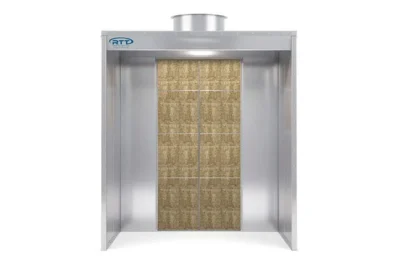
Open Front
- Industrial Paint Booths
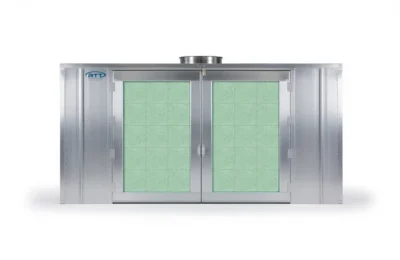
Enclosed
- Industrial Paint Booths
Industrial Exhaust Chamber
- Industrial Paint Booths
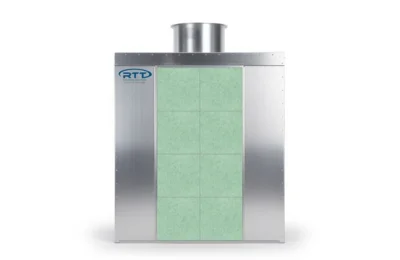
Crossdraft
- Large Equipment Paint Booths
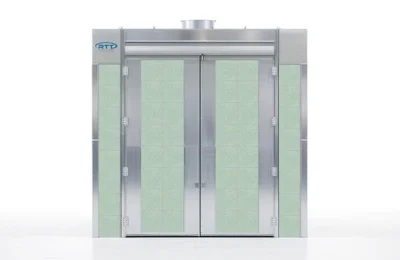
Downdraft
- Large Equipment Paint Booths
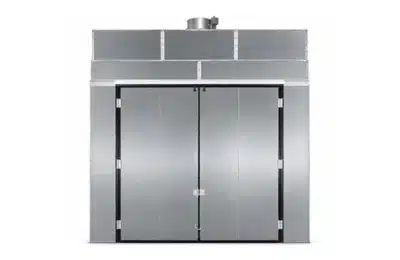
Modified Downdraft
- Large Equipment Paint Booths
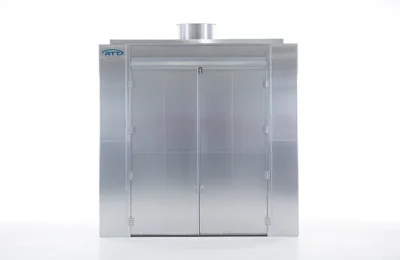
Side Downdraft
- Large Equipment Paint Booths
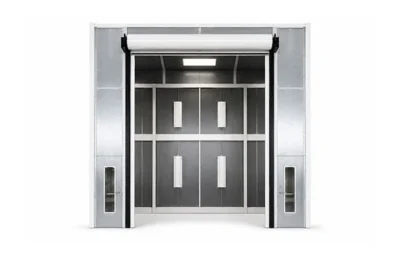
Batch Cure Chamber
- Ovens
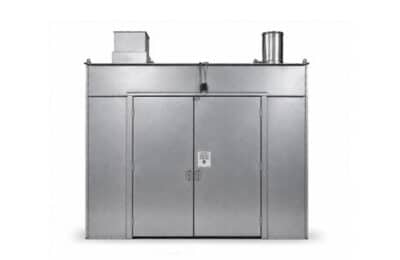
Industrial Paint Mixing Room
- Preparation Equipment
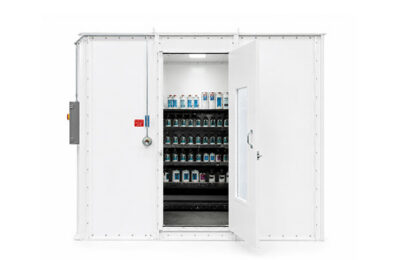
Batch
- Ovens
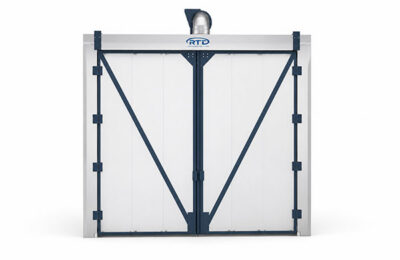
Process
- Ovens
VHD Batch
- Ovens
Multi-Stage Process Washer
- Preparation Equipment
Wash Booth
- Preparation Equipment

CT Series
- Air Makeup Units
Batch
- Powder Coating Booths
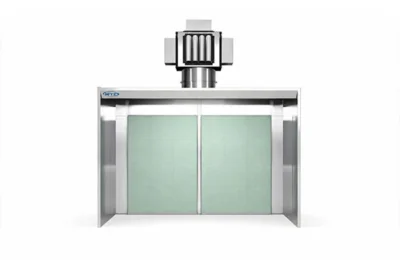
Cartridge Batch
- Powder Coating Booths
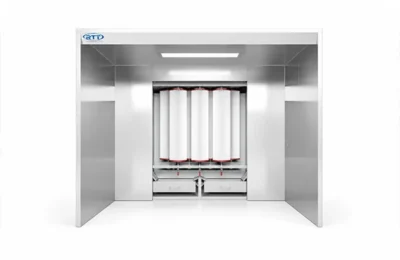
Pass Through
- Powder Coating Booths
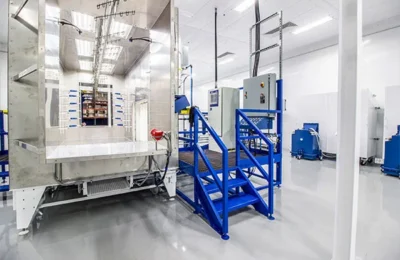
SmartBatch Cure
- Controls