Marine
Spray Painting and Powder Coating in the Marine and Shipbuilding Industry
There is no more demanding surface finishing environment in the industrial world than the open ocean. A commercial vessel operating on transoceanic trade routes spends years at a time exposed to salt spray, UV radiation, wave impact, microbial fouling, electrochemical corrosion, and the mechanical abrasion of docking operations — all simultaneously, and largely without the possibility of conventional maintenance access. A naval warship must add resistance to blast overpressure, chemical and biological decontamination agents, and radar-reflectivity management to that list. An offshore drilling platform must survive all of the above while also resisting hydrocarbon contamination, fireproofing demands, and the structural stresses of constant wave loading.
The coatings that protect these structures are among the most technically sophisticated in any industrial sector. They are also among the most hazardous to apply. The chemistry required to achieve multi-year performance in marine environments — high-build epoxies, two-component polyurethanes, tributyltin-free antifouling biocides, zinc-rich primers, and coal tar derivatives — involves compounds that present serious risks to the workers who apply them and to the environments surrounding the facilities where they are produced and maintained.
This article examines the primary coating processes used across the marine and shipbuilding industry, the systems designed to contain the fumes and airborne pollutants they generate, and the health and compliance obligations that govern this demanding sector of industrial finishing.
The Marine Coating Environment: Scale, Complexity, and Stakes
To understand marine coating operations, it helps to appreciate the physical scale involved. A modern ultra-large container vessel (ULCV) has a hull surface area exceeding 30,000 square meters — roughly six times the floor area of a professional basketball arena. A Nimitz-class aircraft carrier presents more than 50,000 square meters of steel surface requiring protection. An offshore production platform may have complex three-dimensional structure with surface areas measured in hectares. Applying multiple coats of high-performance protective systems across these areas, often in outdoor environments subject to weather constraints, within tight drydock schedules, is an industrial undertaking of staggering complexity.
The marine coating industry broadly divides into three segments, each with distinct process requirements and regulatory contexts. New construction shipbuilding takes place in purpose-built facilities — graving docks, drydocks, and covered building halls — where coating can be applied to steel sections before assembly and to complete hulls in controlled conditions. Ship repair and maintenance occurs in drydocks and boatyards where vessels are taken out of service for scheduled or emergency maintenance, operating under compressed timelines and often in less controlled environmental conditions. Offshore structure fabrication and maintenance encompasses the coating of fixed and floating platforms, subsea infrastructure, and associated equipment, often involving field application under conditions that challenge even the most robust coating systems.
Within each segment, the stakes of coating failure are high. Corrosion of a ship’s hull plating progresses rapidly once protective coatings are breached in a marine environment, and hull plate renewal is among the most expensive maintenance operations a shipowner can face. Antifouling coating failure allows rapid colonization of the hull by barnacles, mussels, and algae, increasing hydrodynamic drag and fuel consumption by 10 to 40 percent depending on the extent of fouling. For a large commercial vessel consuming several hundred tonnes of bunker fuel per day, this is a directly material economic consequence. Coating failure on offshore structures can expose structural steel to accelerated corrosion in the splash zone — the most aggressive corrosion environment in marine service — with potentially catastrophic structural consequences.
Marine Coating Systems and Their Chemistry
Zinc-Rich Primers and Cathodic Protection Coatings
The foundation of virtually every marine coating system is corrosion protection of the steel substrate. Zinc-rich primers achieve this through a sacrificial mechanism — the zinc particles in the primer film are electrically connected to the steel and corrode preferentially, providing cathodic protection analogous to hot-dip galvanizing. Inorganic zinc silicate primers, cured by moisture-driven hydrolysis of an ethyl or sodium silicate binder, provide the most robust corrosion protection and are widely specified for new construction shipbuilding as the initial priming layer applied to blast-cleaned steel.
Organic zinc-rich epoxy primers offer somewhat less corrosion performance than inorganic zinc silicates but are more tolerant of less-than-ideal application conditions and substrate cleanliness, making them common in repair contexts. Both types generate airborne zinc dust during spray application — a significant inhalation hazard discussed in detail in the health risks section.
High-Build Epoxy Intermediate Coats
Two-component epoxy coatings form the structural layer of most marine protective systems. Applied in multiple coats to achieve dry film thicknesses of 200 to 600 microns or more, high-build epoxy coatings provide the barrier protection, mechanical strength, and adhesion platform that the overall coating system depends on. Modified epoxies — coal tar epoxy, glass flake epoxy, and novolac epoxy variants — extend performance in specific applications such as crude oil cargo tanks, fuel storage, and highly acidic or alkaline cargo environments.
Coal tar epoxy, a blend of coal tar pitch and epoxy resin, has long been used for underwater hull protection and ballast tank coatings due to its exceptional water and chemical resistance. Coal tar pitch contains polycyclic aromatic hydrocarbons (PAHs), including known carcinogens such as benzo[a]pyrene, and exposure to coal tar epoxy aerosol during spray application carries both respiratory and dermal carcinogenic hazard. Regulatory pressure and growing availability of equivalent-performing coal tar-free epoxy alternatives have reduced new coal tar epoxy application in many markets, but legacy coatings encountered during maintenance and repair work remain a significant exposure concern.
Glass flake epoxy incorporates glass flake pigments that align parallel to the substrate surface during cure, creating a tortuous path for moisture and ionic species diffusing through the film. This dramatically extends coating service life in immersion service and is widely used for ballast tanks, offshore splash zones, and ship hull internals. Glass flake pigments can fracture during application and abrasion, generating respirable silica-containing particulate — an additional hazard consideration for applicators and abrasive blasters working around glass flake epoxy surfaces.
Antifouling Coatings
Antifouling coatings on ship underwater hulls are functionally unlike any other industrial coating category. Their purpose is to continuously release biocidal compounds into the surrounding seawater at a controlled rate sufficient to prevent settlement and growth of marine organisms — barnacles, tube worms, mussels, algae, and bacterial biofilms — on the hull surface. The biocidal chemistry required to achieve this function makes antifouling coatings among the most environmentally and toxicologically complex coating systems in use.
Self-polishing copolymer (SPC) antifouling systems are the current commercial standard for deep-sea trading vessels. The binder resin hydrolyzes in seawater at a controlled rate, releasing biocides — primarily cuprous oxide, supplemented by organic co-biocides such as zinc pyrithione, Sea-Nine 211 (4,5-dichloro-2-n-octyl-4-isothiazolin-3-one), or Irgarol 1051 (cybutryne) — as the film polishes away. The biocide release rate is engineered to match the vessel’s operational profile, maintaining effective fouling control through the desired drydocking interval.
Biocide-free fouling release coatings based on silicone elastomers and fluoropolymers represent an alternative approach — rather than killing fouling organisms, these coatings provide surfaces so smooth and low in surface energy that organisms cannot attach effectively, and those that do attach are removed by hydrodynamic shear during vessel operation. These systems have grown in market share for fast vessels where hull speed provides effective hydrodynamic cleaning, but they require careful surface preparation and are less effective for slow-speed vessels with extended port time.
Tributyltin (TBT) self-polishing antifouling systems, once the global industry standard, were banned by the International Maritime Organization (IMO) under the AFS Convention, with application prohibited since 2003 and presence on hulls prohibited since 2008. TBT compounds are potent endocrine disruptors that caused widespread reproductive harm to marine gastropods at concentrations in the parts-per-trillion range. The legacy of TBT contamination in harbor sediments continues to be an environmental remediation concern in many port areas.
Topside and Superstructure Coatings
Vessel topsides, superstructures, and deck equipment above the waterline are exposed to UV radiation, salt spray, and atmospheric weathering rather than continuous immersion. Two-component aliphatic polyurethane topcoats are the industry standard for these areas, providing gloss retention, UV resistance, and chemical resistance comparable to aerospace exterior coating systems. The isocyanate content of these formulations presents the same occupational respiratory sensitization hazard as in aerospace applications — a hazard that is acutely serious given the large surface areas involved and the common use of airless spray equipment that generates very fine aerosol mist.
Alkyd-based systems remain in use for less demanding topside applications on smaller commercial and recreational vessels, particularly where cost and ease of application take precedence over maximum durability. Moisture-cure urethanes are used for maintenance painting of structures where surface moisture makes standard two-component systems difficult to apply.
Specialized Functional Coatings
Marine applications encompass a range of specialized functional coatings beyond the standard corrosion protection and antifouling stack. Fireproofing intumescent coatings are mandated by international maritime safety conventions on structural steel in accommodation spaces and machinery rooms. Non-skid deck coatings provide traction on working decks and flight decks. Tank lining systems — many based on solvent-free epoxy or vinyl ester formulations — protect cargo tanks, fuel tanks, and water tanks from chemical attack and contamination of cargo. Heat-resistant coatings protect exhaust stacks and engine room steel from elevated temperatures. Each of these specialized systems has its own application requirements, drying and curing parameters, and hazard profile.
Spray Painting Processes in Shipbuilding and Ship Repair
Airless Spray Application
Airless spray is the dominant application method for marine coating operations, and for good reason. Airless spray uses high hydraulic pressure — typically 150 to 300 bar — to force paint through a small orifice, atomizing it into a fan-shaped spray pattern without using compressed air for atomization. This allows the application of high-viscosity, high-build coatings that could not be effectively atomized by conventional air spray equipment. High-build epoxy intermediate coats, zinc-rich primers, and antifouling systems with film build requirements of 75 to 300 microns per coat are routinely applied by airless spray.
The high pressure and fine atomization of airless spray create aerosol mist with very fine particle size — aerosol that remains airborne for extended periods and penetrates deep into the respiratory tract. Airless spray also presents a direct injection injury risk if the spray tip contacts skin at operating pressure — a serious and underappreciated physical hazard that can result in limb-threatening injection of paint into subcutaneous tissue. Standard safety procedures mandate the use of the gun safety lock at all times when the trigger is not being pulled and prohibition of testing spray patterns against the hand.
Plural-component airless spray systems mix the two components of two-component epoxy and polyurethane coatings at or near the spray gun tip rather than pre-mixing in a pot. This eliminates the pot life constraint that limits usable time for pre-mixed two-component systems, allows continuous spraying of fast-cure formulations, and reduces waste from unmixed material at the end of a work session. Plural-component systems are particularly common for applying high-build epoxy coatings on large hull areas and for solvent-free epoxy tank linings.
Conventional Air Spray and HVLP for Finish Coats
Conventional air spray and HVLP equipment are used for finish coat application — polyurethane topcoats, varnishes, and other coatings where appearance quality is paramount and the lower film build per pass of conventional spray is acceptable. HVLP systems, with their higher transfer efficiency and reduced overspray, have largely replaced conventional air spray for topcoat application in professional marine finishing environments, reducing both material waste and the volume of airborne overspray requiring containment.
Roller and Brush Application in Confined Spaces
Roller and brush application are used extensively in confined space coating operations — cargo holds, ballast tanks, void spaces, and other areas where spray application would either be impractical or would create unacceptable vapor accumulation in an enclosed environment. Roller application generates relatively little airborne aerosol compared to spray methods, but the solvents present in the coatings applied still volatilize from the wet film into the confined space atmosphere, creating hazardous vapor concentrations that require continuous forced ventilation and supplied-air respiratory protection.
Confined space coating operations in ships represent one of the highest-risk activities in the marine industry — the combination of toxic coating materials, poor natural ventilation, potential for rapid vapor buildup to explosive concentrations, limited egress routes, and worker fatigue from working in awkward postures in enclosed spaces creates a hazard profile that has claimed many lives in shipyards worldwide. The control hierarchy for confined space painting begins with maximizing ventilation and ends with supplied-air respirators — air-purifying respirators are generally inadequate for brush and roller application in poorly ventilated confined spaces.
Thermal and Flame Spray for Corrosion Protection
Thermal spray metallizing — the application of zinc, aluminum, or zinc-aluminum alloy coatings by arc wire or flame spray — provides long-life cathodic protection of structural steel in marine splash zones, offshore platforms, and bridge structures. Arc wire spray processes use an electric arc to melt two wire feedstocks that are atomized by compressed air. The resulting coating provides galvanic protection comparable to hot-dip galvanizing but can be applied in the field to fabricated structures that cannot be dipped.
Metal fume from zinc and aluminum thermal spray represents a significant inhalation hazard. Zinc oxide fume is the agent responsible for metal fume fever — a flu-like syndrome characterized by chills, fever, myalgia, and leukocytosis that typically resolves within 24 to 48 hours but recurs with subsequent exposures. Chronic zinc oxide exposure is associated with more serious respiratory effects. Aluminum dust in respirable concentrations carries its own long-term pulmonary burden. Thermal spray operations in outdoor marine environments are among the more hazardous field application processes, requiring respiratory protection and awareness of wind direction relative to the work zone.
Powder Coating in Marine Applications
Where Powder Coating Is Used in Marine Contexts
Powder coating plays a significant supporting role in marine manufacturing and outfitting, though it is not used for primary hull protection where the size and complexity of ship structures make electrostatic powder application impractical. The marine applications where powder coating is most common include deck equipment and hardware — cleats, fairleads, winch drums, bollards, chain lockers, and hatch covers — where component geometry and size are suited to spray booth application and oven curing, and where the superior impact resistance and corrosion protection of a cured powder film is highly valued.
Offshore platform components — handrails, grating panels, equipment skids, cable trays, and instrument enclosures — are frequently powder coated in fabrication shops before installation, taking advantage of the process’s efficiency for batch finishing of repetitive components. Marine electrical enclosures, junction boxes, and control panels destined for saltwater environments benefit from powder coating’s ability to produce thick, pinhole-free films that provide robust barrier protection against salt-laden atmospheres.
Yacht and recreational vessel components — aluminum extrusions, stanchions, deck fittings, and hardware — are commonly powder coated in specialist marine finishing shops. The aesthetic quality achievable with powder coating, combined with its excellent salt spray resistance, makes it a preferred finish for high-end marine hardware where appearance and durability are equally important.
Marine-Specific Powder Formulations
Standard polyester powder coatings, while providing excellent UV resistance and weatherability for many applications, may be insufficient for the most aggressive marine salt spray environments. Marine-grade powder formulations — epoxy-polyester hybrids, pure epoxy powders for immersion or underground service, and specialty TGIC-free polyester formulations with enhanced salt spray resistance — have been developed specifically for marine and offshore applications. These formulations are designed to achieve 3,000 hours or more of salt spray resistance in ASTM B117 testing, meeting the qualification requirements of offshore classification societies and marine procurement specifications.
Two-coat powder coating systems — an epoxy primer powder followed by a polyester or polyurethane topcoat powder, both applied and cured in sequence — provide performance exceeding what either layer alone can achieve, combining the corrosion protection characteristics of epoxy with the UV and weathering resistance of the topcoat chemistry. These systems are increasingly specified for offshore platform hardware and marine deck equipment in particularly aggressive environments.
Combustible Dust and Process Safety in Marine Powder Coating
Marine fabrication facilities operating powder coating lines must manage combustible dust hazards with particular attention to the scale and layout of their operations. Fabrication shops handling large components often have spray booth designs and powder handling systems that are physically larger than those in other industries, and the potential consequences of a dust explosion in a large marine fabrication facility are correspondingly severe. Adequate static grounding of all conductive equipment, suppression or isolation of powder collection systems, and maintenance of booth airflows above minimum design values are non-negotiable safety requirements that must be sustained through operational discipline and preventive maintenance programs.
Surface Preparation: The Foundation of Marine Coating Performance
No discussion of marine coating processes is complete without addressing surface preparation, because the durability of any marine coating system is more dependent on the quality of the surface to which it is applied than on any other single factor. Marine coating specifications universally mandate abrasive blast cleaning of steel surfaces to defined cleanliness standards — most commonly Swedish Standard Sa 2.5 (near-white metal blast) or Sa 3 (white metal blast) — before primer application. This creates its own set of significant airborne hazard challenges that operate in parallel with those of the coating application itself.
Abrasive Blasting Operations
Abrasive blasting uses compressed air to propel abrasive particles — steel grit, steel shot, copper slag, garnet, or aluminum oxide — at high velocity against the steel surface, removing mill scale, rust, existing coating, and surface contamination while creating the surface profile (roughness) that promotes adhesion of the subsequent primer coat. The operation generates massive quantities of airborne dust — abrasive breakdown products, dislodged rust and mill scale particles, and, critically, particles from existing coatings being removed.
When existing antifouling coatings are being blast-cleaned during ship repair, the dust generated contains the biocidal compounds from those coatings — cuprous oxide, organic biocides, and potentially legacy TBT compounds in older vessels. When coal tar epoxy coatings are blast-cleaned, the dust carries PAH contamination. When lead-based anti-corrosion primers from older vessels are encountered — a genuine risk in naval maintenance and historic vessel restoration — the blast dust may contain significant lead concentrations, triggering the full requirements of OSHA’s Lead Standard.
Wet abrasive blasting and water jetting alternatives generate less airborne dust than dry blasting at the cost of leaving a wet surface that requires careful management to prevent flash rusting before primer application. Vacuum blasting systems contain the abrasive and debris within an enclosed head that recovers material for recycling, dramatically reducing airborne release — an approach with obvious appeal for confined spaces and environmentally sensitive locations, though at lower productivity than open blasting.
The silica content of abrasive media deserves specific attention. Crystalline silica in respirable particle size is the agent of silicosis — a serious, progressive, and incurable fibrotic lung disease. Silica sand was historically used as a blasting abrasive and is still encountered in some parts of the world, though it has been banned or restricted for open blasting in many jurisdictions precisely because of silicosis risk. Modern marine industry practice uses silica-free abrasives, but workers must be alert to legacy practices and non-compliant material sources.
Containing Fumes and Airborne Pollutants in Marine Coating Operations
The Unique Challenges of Marine Coating Ventilation
Marine coating operations present ventilation challenges with no parallel in most other industries. The scale of the structures being coated — ship hulls hundreds of meters long, ballast tanks with multiple compartments spanning entire hull sections, offshore platform legs extending tens of meters — makes conventional enclosed spray booth containment impossible for the majority of marine coating work. Most external hull coating in new construction and repair occurs in graving docks or floating dry docks that are open to the environment, relying on natural ventilation supplemented by local mechanical systems rather than the enclosed booths that characterize automotive and aerospace finishing.
This fundamental difference in containment capability has significant implications for both worker protection strategies and environmental emission control. Where an automotive refinishing shop can enclose every coating operation in a ventilated spray booth with exhaust treatment, a shipyard painting crew working on a 300-meter hull in a dry dock must achieve worker protection primarily through respiratory protection programs rather than engineering enclosure of the emission source.
Enclosed Spray Booths for Components and Sections
Where marine coating work involves discrete components or prefabricated steel sections of manageable size, enclosed spray booths providing conditions comparable to other industries are both practical and used. Steel block sections assembled before hull erection are commonly primed in enclosed or semi-enclosed blasting and painting halls in modern shipyards, where controlled conditions permit better surface preparation quality, more consistent coating application, and meaningful exhaust treatment. These block painting facilities represent the state of the art in marine coating environmental control and worker protection.
Component finishing shops for deck equipment, hardware, pipe spools, and outfitting items routinely use purpose-built spray booths with downdraft or crossflow ventilation, exhaust filtration, and in some cases thermal oxidation for VOC destruction. These operations are essentially indistinguishable from general industrial finishing operations in their engineering control requirements and capabilities.
Confined Space Ventilation: Ballast Tanks and Cargo Holds
Confined space coating operations — the painting of ballast tanks, void spaces, cargo holds, and other enclosed structural compartments — represent the most demanding ventilation challenge in marine coating work. Natural ventilation within ship compartments is generally inadequate to dilute solvent vapors from coating application to safe concentrations. Mechanical ventilation — forced air supply and exhaust via portable fans and ducting — is mandatory for all confined space coating operations.
The design of confined space ventilation systems for marine coating must achieve several simultaneous objectives: maintaining solvent vapor concentrations below 10 percent of the lower flammable limit (LFL) throughout the space; providing fresh air to the breathing zone of workers applying coating; exhausting contaminated air to the exterior of the vessel without recirculation; and doing all of this in structural spaces that may have complex internal geometry, limited access points, and atmospheric monitoring requirements.
Ventilation rates for confined space solvent coating operations in marine applications are typically calculated based on the volume of solvent being applied per unit time and the dilution required to maintain vapor concentrations below the LFL safety threshold and below occupational exposure limits simultaneously. These calculations frequently yield ventilation requirements of tens of thousands of cubic meters per hour for large tank spaces with active spray application — requiring industrial-scale portable ventilation equipment and careful ducting design to achieve effective air distribution within the space.
Continuous atmospheric monitoring for oxygen content, flammable vapor concentration, and toxic gas levels is required throughout confined space coating operations. Portable multi-gas monitors worn by workers or positioned at representative locations within the space provide the real-time data needed to detect ventilation failures, coating system changes, or atmospheric ingress before concentrations reach dangerous levels. Entry into a confined space for coating operations without current atmospheric monitoring data is one of the most dangerous procedural shortcuts in the industry.
Open Drydock and Outdoor Hull Painting
External hull painting in open drydock environments relies primarily on dilution ventilation by natural air movement and, where conditions permit, portable fans positioned to promote air circulation along the hull surface. Worker respiratory protection becomes the primary control measure for airborne contaminant exposure in these open environments, supplemented by work practice controls — painting in downwind positions relative to the spray direction, rotating workers to limit individual exposure duration, and scheduling high-solvent-emission operations during periods of favorable wind conditions.
Environmental emission control for open drydock painting is primarily addressed through coating selection — choosing high-solid or waterborne formulations with lower VOC content — rather than through exhaust treatment, since the open environment makes capture of emissions for treatment impractical. Some jurisdictions impose VOC content limits on marine coating products used in their territories, effectively mandating lower-emission formulations at the product specification level.
Overspray Containment and Environmental Protection
Antifouling paint overspray during hull application in dry docks represents a specific environmental protection challenge. Cuprous oxide and organic biocide overspray settling on drydock surfaces, in drydock water, or in surrounding soil creates localized contamination that must be managed to meet environmental discharge permits. Many shipyards use containment sheeting around the hull waterline area during antifouling application, combined with dust suppressant water misting, to capture overspray before it can disperse. Drydock wastewater and wash-down water from painting operations requires treatment before discharge to remove heavy metals and other contaminants.
Health Risks to Marine Coating Workers
Isocyanates: Occupational Asthma in Topcoat Application
Two-component polyurethane topcoat application on vessel topsides and superstructures exposes painters to isocyanate aerosol under conditions that frequently differ from those in enclosed industrial facilities. Large open hull surfaces, wind exposure, the physical exertion of working from stages or rope access positions, and the pressure to complete coating operations within tight tidal or weather windows can all compromise respiratory protection consistency. Yet the consequences of isocyanate sensitization are identical regardless of the setting: permanent respiratory sensitization that renders the affected individual unable to work safely in any isocyanate-containing environment.
The marine painting workforce has historically had lower rates of supplied-air respirator use during isocyanate topcoat application than aerospace or automotive finishing workforces, in part because of the open-environment perception that dilution makes exposures lower than in enclosed booths. Air monitoring studies have repeatedly demonstrated that this perception is incorrect — airless spray application of polyurethane topcoats generates isocyanate concentrations exceeding occupational exposure limits at the painter’s breathing zone even in outdoor conditions with favorable wind. Supplied-air respiratory protection is equally necessary in open marine environments as in enclosed spray booths.
Epoxy Sensitization and Contact Dermatitis
Epoxy resin systems used extensively in marine coating — high-build epoxy primers, coal tar epoxy, glass flake epoxy, and solvent-free tank linings — expose applicators to uncured bisphenol A diglycidyl ether (BADGE) and related epoxy monomers and their amine or amide hardeners. Skin contact with these materials is the dominant exposure route for epoxy sensitization in marine painting, and the consequences include both contact dermatitis and, following dermal sensitization, the potential for subsequent inhalation exposures to trigger systemic reactions.
The marine painting environment creates multiple routes for epoxy skin exposure: spray mist depositing on exposed skin, contact with freshly applied coating during confined space work in close quarters with wet surfaces, and handling of mixing equipment and containers without adequate glove protection. The prevalence of occupational contact dermatitis among marine coating workers is substantially higher than in the general manufacturing workforce, reflecting both the intensity of epoxy exposure and historically inadequate dermal protection practices in the sector.
Coal Tar and Polycyclic Aromatic Hydrocarbon Exposure
Coal tar epoxy coatings, widely used in marine ballast tank and underwater hull applications, contain coal tar pitch — a complex mixture of PAHs including benzo[a]pyrene, benzo[a]anthracene, and dibenz[a,h]anthracene, several of which are confirmed human carcinogens classified as Group 1 by IARC. Spray application of coal tar epoxy generates aerosol containing these compounds, and surface abrasion during surface preparation of existing coal tar epoxy coatings generates dust with significant PAH content.
Skin contact with coal tar epoxy is an additional concern — PAHs are absorbed through the skin and some are potent skin sensitizers and photosensitizers, causing severe burns on sun-exposed skin areas contaminated by coal tar products. Workers applying or stripping coal tar epoxy coatings require chemical-resistant protective clothing covering all skin, in addition to respiratory protection for aerosol and dust inhalation.
The long-term cancer risk associated with occupational PAH exposure in painting and surface treatment work is well established epidemiologically. Bladder cancer and lung cancer risks are elevated in workers with substantial career PAH exposure, and the marine painting workforce — with frequent coal tar epoxy exposure over multi-decade careers — represents a population with meaningful excess risk that warrants ongoing health surveillance.
Antifouling Biocide Exposure
Cuprous oxide, the primary biocide in most commercial antifouling formulations, is an inhalation and dermal hazard during spray application. Copper compounds are respiratory irritants and sensitizers, and cuprous oxide dust generated during antifouling sanding or blasting can cause nasal and pulmonary irritation. Copper is also a skin and eye irritant, and prolonged skin contact with antifouling paints containing cuprous oxide can cause contact dermatitis.
Organic co-biocides in antifouling formulations — zinc pyrithione, Sea-Nine (DCOIT), and others — present their own toxicological profiles. Zinc pyrithione is a respiratory sensitizer and neurotoxin at high doses. DCOIT has demonstrated respiratory sensitization potential in animal studies. Occupational exposure assessment for antifouling application must account for the full biocide cocktail rather than focusing solely on the cuprous oxide component.
The legacy exposure concern presented by TBT compounds in older vessel coatings encountered during drydock maintenance deserves explicit attention. Organotin compounds, including TBT, are endocrine disruptors that cause reproductive harm in both marine organisms and mammals. Workers sanding, blasting, or otherwise disturbing TBT-containing antifouling coatings on older vessels are at risk of dermal and inhalation exposure to these compounds, and the waste generated from these operations requires specific characterization and handling as potentially organotin-contaminated material.
Confined Space Accumulation of Solvent Vapors
The acute fatality risk from solvent vapor accumulation in poorly ventilated ship compartments during coating operations is among the most serious in any industrial setting. Solvents in marine coatings — including ketones, aromatic hydrocarbons, glycol ethers, and alcohols — are heavier than air and accumulate in bilges and low points within tank spaces. Concentrations can rise to explosive levels within minutes of beginning spray application in an inadequately ventilated space, and to concentrations causing rapid incapacitation and death within a space that has been painted and then sealed without adequate purging.
Marine painting fatalities from solvent vapor asphyxiation and fire or explosion in confined spaces occur with disturbing regularity in shipyards worldwide, predominantly in smaller operations with less developed safety management systems. The consistent thread through accident investigations is failure of ventilation — either no ventilation was provided, the ventilation system failed undetected, or the ventilation was provided but inadequate for the volume of solvent being applied. Atmospheric monitoring that workers trust and act on is the critical defense.
Lead in Legacy Marine Coatings
Lead-based paints were used extensively in marine applications — as anti-corrosion primers, as red lead protective coatings, and as lead chromate pigmented topcoats — until lead was progressively restricted and ultimately banned in marine coatings in most developed markets from the 1980s onward. Vessels constructed before those restrictions, including many naval vessels, historic ships, and older commercial vessels still in service, may have multiple layers of lead-containing coatings that are encountered during maintenance and repair operations.
Disturbance of lead-based marine coatings through sanding, grinding, needle gunning, or abrasive blasting generates lead dust and fume that poses acute and chronic lead poisoning risk. Acute high-level exposure causes lead encephalopathy. Chronic lower-level exposure is associated with peripheral neuropathy, nephropathy, hypertension, and cognitive impairment. OSHA’s Lead Standard (29 CFR 1910.1025 for general industry; 1926.62 for construction) imposes comprehensive requirements for operations that disturb lead-containing coatings, including air monitoring, biological monitoring, medical surveillance, and engineering controls.
Noise and Physical Hazards
Airborne chemical hazards exist alongside significant physical hazards in marine coating operations. Abrasive blasting equipment and industrial ventilation systems generate noise levels routinely exceeding 100 dBA — well above the 85 dBA action level and 90 dBA PEL in OSHA’s noise standard. Simultaneous use of respiratory protection and hearing protection is standard in blasting and painting operations. Work at height from stages, scaffolds, and rope access equipment, in spaces with limited lighting and egress, adds fall and entrapment risk that compounds the chemical exposure management challenge.
Regulatory Compliance in Marine Coating Operations
International Maritime Organization Regulations
The IMO’s Anti-Fouling Systems Convention (AFS Convention), which entered into force in 2008, prohibits the application and presence of organotin-based antifouling systems on vessel hulls. Ships are required to hold an International Anti-Fouling System Certificate, and hull inspections during port state control can include verification of antifouling system compliance. The AFS Convention framework establishes a precedent for international product-level regulation of marine coating chemistry that may expand to address other biocidal and environmental concerns in antifouling formulations.
The IMO’s Performance Standard for Protective Coatings (PSPC), adopted in 2006 and incorporated into SOLAS, establishes mandatory technical requirements for protective coatings applied to ballast tanks and void spaces on new vessels above specified size thresholds. The PSPC prescribes coating selection criteria, surface preparation standards, application conditions, film thickness requirements, and inspection procedures — creating a globally harmonized framework for ballast tank coating quality that has substantially improved the uniformity and durability of coating systems in these critical areas.
EPA Air Emission Standards for Shipbuilding
In the United States, shipbuilding and ship repair facilities emitting hazardous air pollutants above threshold quantities are subject to the EPA’s NESHAP for Shipbuilding and Ship Repair Operations, codified at 40 CFR Part 63, Subpart II. This rule applies to facilities performing surface coating operations and establishes requirements for the HAP content of coatings used in covered operations, work practice standards for handling coating materials and cleaning solvents, and recordkeeping and reporting obligations.
Subpart II establishes separate limits for different coating categories — general use coatings, specialty coatings (antifouling, pretreatment, and others), and cleaning solvents — reflecting the different emission reduction potential across these product types. Facilities may alternatively comply through use of an averaging approach that calculates HAP emissions across the coating categories used.
State air quality regulations may impose additional requirements. California’s CARB regulations and South Coast AQMD rules impose VOC content limits on marine coatings and antifouling products that go beyond the federal NESHAP floor, and facilities in those jurisdictions must comply with the more stringent state requirements.
OSHA Standards Applicable to Marine Coating Operations
Marine coating and surface preparation operations in U.S. shipyards are subject to OSHA’s Shipyard Employment Standards (29 CFR Part 1915) rather than the General Industry Standards that apply in most other industrial settings. Part 1915 includes specific provisions for confined and enclosed spaces and other dangerous atmospheres (Subpart B), surface preparation and preservation (Subpart C), and personal protective equipment (Subpart I) that reflect the particular hazards of shipyard work.
Specific regulatory requirements of significance to marine coating operations include:
- 29 CFR 1915.12 — Precautions Before Entering Confined and Enclosed Spaces: Establishes requirements for atmospheric testing, ventilation, and access control before workers enter spaces for coating or other operations. This is the foundational regulatory requirement for confined space coating safety in shipyard environments.
- 29 CFR 1915.35 — Painting: Addresses spray painting operations specifically, requiring adequate ventilation, prohibition of spray painting in confined spaces without continuous forced air ventilation, and appropriate respiratory protection for painting operations.
- 29 CFR 1915.1025 — Lead: The shipyard-specific lead standard applies to operations that disturb lead-containing coatings, with requirements for air monitoring, engineering controls, respiratory protection, biological monitoring, and medical surveillance mirroring those of the general industry lead standard.
- 29 CFR 1915.1026 — Hexavalent Chromium: Applies to facilities using chromate-containing primers or encountered during maintenance of chromate-primed surfaces, with requirements paralleling those of the general industry Cr(VI) standard.
EPA Hazardous Waste Requirements for Marine Facilities
Marine coating and surface preparation operations generate multiple hazardous waste streams. Blast grit contaminated with heavy metals from existing coatings — lead, chromium, copper, tin — may be characterized as RCRA hazardous waste depending on TCLP (toxicity characteristic leaching procedure) testing results. Waste paint, solvent-contaminated rags, and spent coating containers from antifouling and epoxy operations frequently exhibit toxicity characteristics that trigger hazardous waste classification. Wastewater from drydock wash-downs, wet blasting, and surface preparation operations requires treatment for heavy metals and organic compounds before discharge under Clean Water Act NPDES permits.
International Environmental Regulations for Marine Coatings
Vessels operating internationally are subject to environmental regulations that effectively govern the coating products used in their construction and maintenance. The EU Biocidal Products Regulation (BPR) governs the approval of biocidal active substances used in antifouling products sold in EU markets, with periodic reviews that have already restricted or are currently reviewing several organic co-biocides widely used in antifouling formulations. Cybutryne (Irgarol 1051) has been restricted under BPR following environmental risk assessment. Zinc pyrithione is under scrutiny. These regulatory actions in major markets effectively constrain global antifouling product formulation, since products must meet EU requirements to be commercially viable in European ports.
Classification society coating specifications — issued by Lloyd’s Register, DNV GL, Bureau Veritas, ABS, and other bodies — impose coating quality requirements on vessels seeking class certification, including requirements for approved coating systems in ballast tanks and void spaces under PSPC. Compliance with these requirements is a commercial necessity for most commercial vessels, effectively making classification society standards a quasi-regulatory influence on marine coating practice globally.
What Responsible Marine Coating Operations Do
The highest-performing marine coating operations share a recognizable set of practices that go beyond regulatory minimum compliance. They are characterized by systematic risk management, investment in engineering controls where they are feasible, and a genuine safety culture that treats confined space and chemical exposure hazards as matters of life and death — because they are.
They invest in block painting and section coating facilities that bring marine coating work inside enclosed, ventilated, and controllable environments to the maximum extent that production workflow allows. Modern shipyards that have invested in covered blasting and painting halls for steel sections perform a greater proportion of their total coating work under conditions where engineering controls — ventilated booths, exhaust filtration, temperature and humidity control — can function effectively. The residual outdoor and confined space work that cannot be enclosed is then a smaller fraction of total coating operations, reducing the overall exposure burden on the workforce.
They develop and rigorously enforce confined space entry procedures that treat atmospheric monitoring as a mandatory precondition for entry rather than a paperwork exercise. Continuous monitoring throughout the duration of confined space coating operations, with defined action levels that trigger immediate evacuation, is the standard that prevents the fatalities and near-misses that continue to occur in less disciplined operations. Standby attendants trained in emergency retrieval procedures and equipped with retrieval systems appropriate for the specific confined space geometry are non-negotiable elements of confined space coating programs.
They provide and enforce the use of supplied-air respirators for all isocyanate spray operations and for confined space coating operations — not air-purifying half-masks, which are inadequate for both hazard categories. Airline respirator systems with appropriate hose length, emergency escape provisions, and manifold supply from oil-free compressed air sources that exclude carbon monoxide contamination are the standard for serious marine coating operations. Respiratory protection programs include medical evaluation, fit testing, training, equipment maintenance, and documented program administration.
They conduct product substitution reviews systematically, evaluating available alternatives to the highest-hazard coating materials for each application and switching when performance requirements can be met. Where coal tar epoxy can be replaced with coal tar-free high-build epoxy, responsible operations make the change. Where high-solids or waterborne systems meet coating specifications, they are preferred over high-VOC solvent-borne alternatives. Where silica-free abrasive grades are available and perform adequately, they replace silica-containing materials. Substitution is the most effective long-term hazard reduction strategy and requires ongoing effort as product options evolve.
They maintain occupational hygiene monitoring programs that include air sampling for Cr(VI), isocyanates, PAHs, lead, and key solvents at appropriate frequencies. Biological monitoring — urinary chromium for Cr(VI)-exposed workers, blood lead for lead-exposed workers, urinary PAH metabolites for coal tar epoxy applicators — provides an additional verification layer that confirms whether air monitoring and engineering controls are achieving actual exposure reduction at the biological level. The results of monitoring are used to drive improvement, not filed and forgotten.
And they invest in workforce training that conveys not just procedures but the mechanistic understanding of why those procedures protect health. A marine painter who understands what isocyanate sensitization is, how it occurs, and what it means for their career is far more likely to use their SAR consistently than one who has only been told it is required. The same is true for confined space ventilation requirements, lead exposure controls, and all of the other health protection measures that depend on consistent worker behavior to be effective.
Looking Forward: The Future of Marine Coating and Hazard Control
The marine coating industry faces overlapping pressure from environmental regulation, shipping economics, and occupational health obligations that are collectively driving significant technology evolution. The direction of travel is toward coating systems with lower environmental and occupational hazard profiles that can maintain or exceed the performance of the systems they replace — a demanding target given the severity of the marine service environment.
Biocide-free antifouling technology is advancing on multiple fronts. Silicone and fluoropolymer fouling release coatings continue to improve in durability and ease of application, expanding viable vessel types. Nano-structured surfaces, enzymatic antifouling approaches, and electrical antifouling systems represent longer-range alternatives that could eventually reduce the industry’s dependence on continuous biocide release. The regulatory trajectory in the EU and other major markets for conventional biocides makes the commercial case for these alternatives increasingly compelling.
Chromate-free corrosion inhibition technology is making progress in marine applications as it has in aerospace, though the performance bar set by zinc chromate and strontium chromate in marine service is a high one. Rare earth-based inhibitors, molybdate primers, and organic corrosion inhibitor systems are achieving qualification in some marine specifications, and the elimination of Cr(VI) from shipyard coating operations would represent a major step forward in carcinogenic exposure reduction.
Robotic hull blasting and coating systems are moving from development into commercial deployment for large vessel hulls in drydock. Remote-controlled and fully autonomous blasting and painting robots operating on magnetically adhered tracks along ship hulls can perform the most hazardous and physically demanding aspects of hull maintenance with workers outside the direct exposure zone. While capital costs remain significant and coverage of complex hull geometries challenges current robotic capabilities, the trajectory is clearly toward broader automation of the highest-hazard marine coating tasks.
Digital monitoring and data integration are improving real-time management of coating operations — atmospheric monitoring systems integrated with ventilation control, coating application parameter logging, and predictive analytics for coating system performance based on vessel operational data are all moving from experimental to operational implementation in leading facilities. These tools support better exposure control by providing the real-time information that allows supervisors and workers to respond to changing conditions before they become hazardous.
The ocean covers 70 percent of our planet’s surface, and the vessels and structures that operate across it are protected by coatings applied by a global workforce exposed to some of the most serious chemical hazards in industry. The combination of advanced coating chemistry, rigorous engineering controls, disciplined safety management, and ongoing technology evolution is the path to a future where those workers can protect the structures they coat without sacrificing their own health to do it.
This article is intended for informational purposes only. Specific regulatory requirements vary by jurisdiction, vessel type, facility classification, and the nature of coating operations performed. Marine and shipbuilding employers should consult current federal, state, and international regulations, applicable classification society requirements, and qualified industrial hygienists and marine coating specialists when developing hazard control, coating selection, and compliance programs.
RTT Solutions for the Marine and Shipbuilding Industry
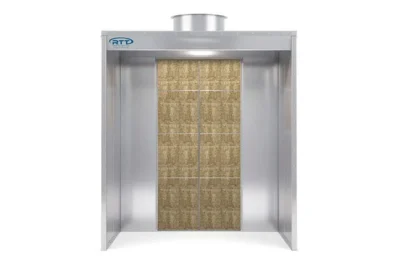
Open Front
- Industrial Paint Booths
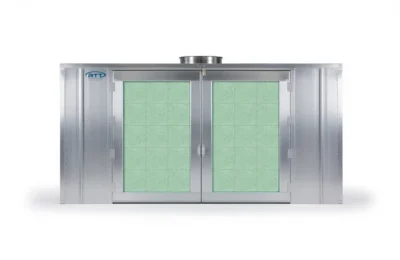
Enclosed
- Industrial Paint Booths
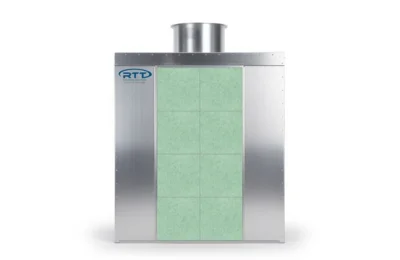
Industrial Exhaust Chamber
- Industrial Paint Booths
Crossdraft
- Large Equipment Paint Booths
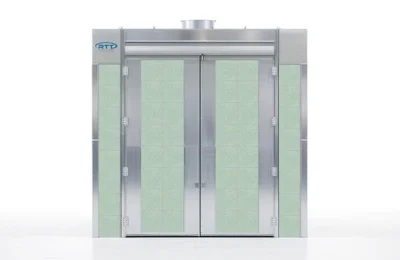
Downdraft
- Large Equipment Paint Booths
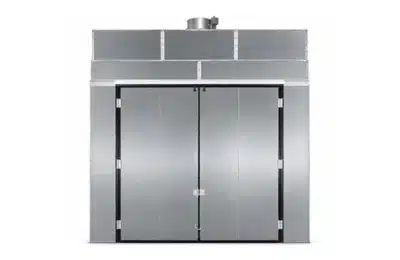
Modified Downdraft
- Large Equipment Paint Booths
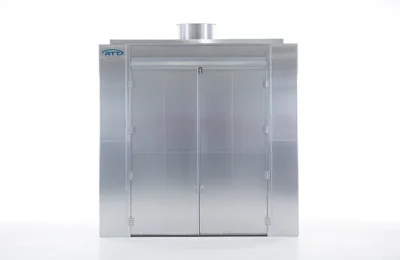
Side Downdraft
- Large Equipment Paint Booths

Industrial Paint Mixing Room
- Preparation Equipment
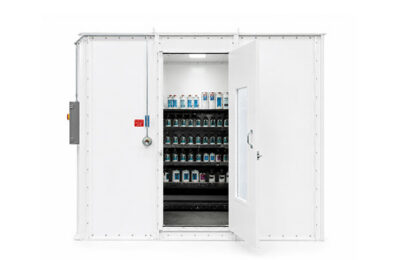
Multi-Stage Process Washer
- Preparation Equipment
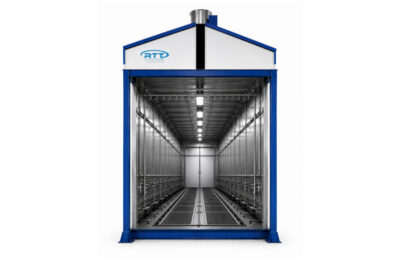
Wash Booth
- Preparation Equipment

CT Series
- Air Makeup Units
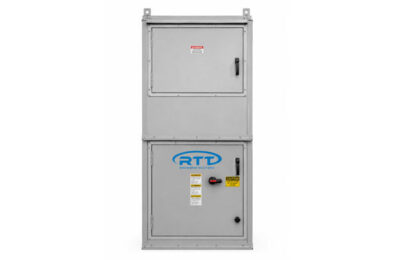
Batch
- Powder Coating Booths

Cartridge Batch
- Powder Coating Booths
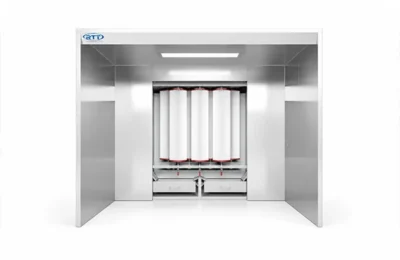
Pass Through
- Powder Coating Booths
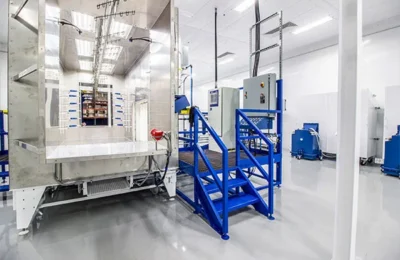
FilterLoc Paint Booth Seal
- Accessories

Ductwork
- Accessories
Filter Monitoring System
- Controls
UL Listed Standard
- Control Panels
Magnetic Motor Starter
- Control Panels
SmartTouch Touchscreen
- Control Panels

Variable Frequency Drive
- Control Panels

E-light LED Lighting
- Accessories