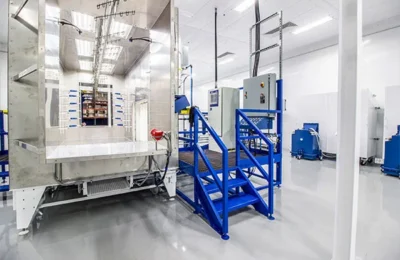
Agriculture
Improve safety and efficiency in agricultural equipment finishing with guidance on spray painting and powder coating hazards, containment strategies, and compliance requirements. Learn best practices and how RTT Finishing Solutions supports safer, compliant operations.
Spray Painting and Powder Coating in the Agriculture Industry
The color of a tractor is not a trivial thing. John Deere green and yellow, Case IH red and black, New Holland blue and yellow, AGCO white — these brand color identities have been cultivated over generations and carry commercial weight that farm equipment manufacturers invest substantially to protect and sustain. But the coating systems beneath those brand colors are about far more than identity. A combine harvester working a wheat harvest in Kansas, a planter threading through Missouri bottomland in spring, an irrigation pivot sweeping a circle through a Nebraska cornfield in August — every one of these machines is subjected to a service environment that tests its protective coatings relentlessly. Chemical fertilizers, pesticides and herbicides, crop residues, abrasive soil particles, humidity cycles from field dew to midday heat, prolonged outdoor storage through prairie winters, and the mechanical battering of gravel roads and rough terrain all work continuously to degrade the coatings protecting the steel, cast iron, and aluminum beneath.
Agricultural equipment is among the most coating-demanding product categories in all of heavy equipment manufacturing. The service life expectations — ten, twenty, or thirty years for a major machine — combined with the chemical and mechanical aggressiveness of the agricultural environment create a finishing challenge that drives substantial investment in coating technology, application quality, and surface preparation at the OEM manufacturing level. At the other end of the equipment lifecycle, farm dealerships, equipment repair shops, custom paint operations, and on-farm maintenance paint crews face the challenge of maintaining and restoring those coatings with resources and facilities that range from fully professional to genuinely improvised.
This article examines spray painting and powder coating as practiced across the agricultural equipment industry — from high-volume OEM finishing lines to the dealer service bay to the farmstead equipment shed — along with the ventilation and containment systems that manage the airborne hazards of these operations, the health risks to the workers who perform them, and the regulatory framework that governs the industry’s finishing practices.
The Agricultural Equipment Finishing Environment: Scale, Diversity, and Harsh Reality
Agricultural equipment finishing spans a wider range of operational contexts than almost any other industry in this series. At one extreme, John Deere’s Waterloo, Iowa manufacturing complex — one of the largest agricultural equipment production facilities in the world — operates fully automated electrocoat primer lines, robotic topcoat application systems, and industrial-scale exhaust treatment equipment meeting the highest standards of environmental and occupational control. At the other extreme, a farmer in central Nebraska repainting the frame of a thirty-year-old grain auger in an unventilated machine shed with a rattle can and no respiratory protection represents the practical reality of agricultural equipment maintenance across much of rural America.
Between these extremes lies a diverse population of finishing operations: regional OEM assembly plants for planters, tillage tools, and specialty equipment; dealer preparation and reconditioning shops that prep used equipment for resale; independent equipment repair and restoration businesses; and custom agricultural equipment painters who specialize in full restorations of collector tractors and vintage farm machinery. Each occupies a different position on the spectrum of hazard management infrastructure and regulatory compliance, and each presents its own pattern of worker exposure and environmental impact.
The agricultural equipment service environment is defined by several characteristics that distinguish it from other heavy equipment sectors. Chemical exposure from the cargo these machines handle — fertilizers, herbicides, insecticides, fungicides, and fumigants — contaminates equipment surfaces during normal operation, creating surface chemistry conditions for coating application that must account for pesticide residues, fertilizer salt deposits, and biological material that would not be present on industrial machinery. The predominantly outdoor storage and operation of agricultural equipment means that coating systems must perform across the full range of climate exposure — UV degradation, temperature extremes, freeze-thaw cycling, and precipitation — without the shelter that protects coatings on machinery used primarily indoors. And the rural geographic distribution of agricultural equipment means that service and maintenance often occur far from the supply chain infrastructure, regulatory oversight, and professional resources available in urban industrial settings.
Agricultural Equipment Coating Systems and Their Chemistry
Electrocoat Primer Systems at the OEM Level
Major agricultural equipment manufacturers use cathodic electrocoat (e-coat) primer as the foundational corrosion protection layer on steel components and fabricated assemblies. Electrocoating immerses the metal part or fabricated assembly in a tank containing a water-based paint emulsion and applies electrical current to deposit the coating uniformly across all surfaces — including interior cavities, weld seams, and complex geometries that spray application cannot reach. The resulting primer film provides exceptional corrosion protection from the inside out, and its uniform film build across all surfaces eliminates the coverage gaps at edges, corners, and weld zones that are the initiation points for corrosion in conventionally sprayed primer systems.
E-coat primers for agricultural equipment are formulated for the specific corrosion challenges of agricultural service: resistance to fertilizer salts, particularly ammonium nitrate and urea-ammonium nitrate (UAN) solution that are among the most corrosive agricultural chemicals encountered; resistance to pesticide solvents and carriers; and the mechanical toughness to withstand abrasive soil contact on tillage and planting equipment. These performance requirements drive e-coat formulations with higher cross-link density and film toughness than the e-coat systems used in automotive body-in-white applications, where the chemical environment is less aggressive.
The electrocoat process itself generates several waste streams requiring environmental management. The e-coat tank requires periodic ultrafiltration to remove accumulated drag-in contaminants and maintain bath chemistry within specification. Rinse water from the post-coat rinse stages carries e-coat drag-out that must be recovered and treated before discharge. Sludge accumulating in the tank bottom requires disposal as industrial waste. Large OEM facilities operating e-coat lines have dedicated wastewater treatment systems managing these streams; smaller operations with e-coat capability may rely on contracted waste management services.
High-Build Epoxy and Polyurethane Intermediate Coats
Over the e-coat primer, agricultural equipment OEMs apply intermediate coat systems that provide additional corrosion barrier thickness and mechanical protection. High-build epoxy intermediate coats — applied by airless spray or electrostatic spray on production lines — contribute film builds of 50 to 150 microns that bridge surface irregularities in weld beads and stamped sheet metal and provide a cohesive substrate for the topcoat. Polyurethane intermediate coats are used in some systems where improved flexibility is required to accommodate the deflection of large fabricated structures during transport and field operation without inter-coat delamination.
Two-component epoxy and polyurethane intermediate coat systems are the most common chemistry at both OEM and dealer/aftermarket levels. The amine and amidoamine hardener systems in two-component epoxy coatings carry skin and respiratory sensitization potential. The isocyanate hardeners in two-component polyurethane intermediate coats carry the same occupational respiratory hazard as in any other polyurethane coating context — a hazard that is not diminished by the agricultural service context in which the finished equipment will operate.
Topcoat Systems: Brand Color and Field Performance
Agricultural equipment topcoats serve two masters simultaneously: the brand color specification that is commercially critical to equipment identity, and the field performance requirements that determine how long the coating maintains acceptable appearance and protection in service. Two-component aliphatic polyurethane topcoats are the OEM standard for premium agricultural equipment, providing the gloss retention, UV stability, and chemical resistance needed to maintain the equipment’s appearance through years of field operation. Alkyd enamel topcoats remain in use for some lower-cost equipment categories and for aftermarket touch-up applications where the handling characteristics and lower cost of single-component systems are preferred over the performance advantages of two-component polyurethane.
Agricultural brand colors present specific formulation challenges that general-purpose industrial topcoats may not fully address. John Deere’s signature green, for example, is a highly saturated, high-chroma color that relies on pigment loading levels and formulation balance that must be carefully maintained to achieve color consistency across production runs and over the service life of the coating system. Color drift from UV degradation is particularly visible in high-chroma brand colors against the neutral background of soil, crop, and sky in which agricultural equipment operates — making UV stability a commercially significant attribute beyond its purely protective function.
Agricultural equipment topcoats must additionally resist the specific chemicals of agricultural service. Glyphosate and other herbicide formulations, common fertilizer solutions including anhydrous ammonia, UAN, and liquid phosphate, and insecticide concentrates all contact equipment surfaces during field operation and during application accidents and equipment maintenance. Topcoat resistance to these materials is evaluated in OEM specifications through immersion testing and spot application test protocols that specifically represent the agricultural chemical portfolio, not the general industrial chemical exposure suite used in non-agricultural equipment specifications.
Specialty Coatings for Agricultural Equipment
Agricultural equipment includes components requiring specialized coating treatments beyond the standard primer-intermediate-topcoat system. Cutting edges, tillage tools, and soil-engaging components on plows, cultivators, and planters operate in continuous abrasive contact with soil and must be protected by abrasion-resistant coatings or treated steel alloys that balance wear resistance with the soil-working performance characteristics required. Boron steel, case-hardened steel, and tungsten carbide hard-facing are used for maximum wear resistance; where coatings are applied to these components, they are typically thin, hard coatings applied by thermal spray or physical vapor deposition rather than conventional spray painting.
Grain contact surfaces inside combines, grain carts, and storage bins require food-safety-compatible coatings that do not contaminate grain with heavy metals, solvents, or other toxic compounds. Coating systems for grain contact surfaces in agricultural equipment are typically epoxy-based food-grade linings or polyurethane systems that have been specifically evaluated for food contact safety. Contamination of harvested grain with coating components — possible if contact surface coatings are not properly selected and applied — has both food safety and commercial consequences that drive conservative coating selection in these applications.
Hydraulic cylinder rods, pivot pins, and wear surfaces in agricultural equipment linkages require hard chrome plating or chromium-free alternatives — electroless nickel, HVOF-applied tungsten carbide, or physical vapor deposition coatings — to resist the combination of abrasion, corrosion, and mechanical loading that characterizes agricultural pivot and sliding contact environments. Where hard chrome plating is used, the hexavalent chromium chemistry of the plating process carries the same carcinogenic hazard as Cr(VI) in any industrial context, requiring the full range of engineering controls, respiratory protection, and biological monitoring specified in OSHA’s Hexavalent Chromium Standard.
Aftermarket and Touch-Up Coating Systems
The aftermarket agricultural equipment coating market — serving dealers, repair shops, and farm equipment restorers — operates with a range of product options that span the quality and hazard spectrum. OEM-approved touch-up aerosols and brush-on enamels formulated to match factory colors exactly are available through dealer parts channels for minor touch-up applications. Aftermarket spray can and quart-can alkyd enamels in approximate brand color matches are widely sold through farm supply stores for larger touch-up areas. Professional-grade two-component polyurethane systems in agricultural brand colors are available through industrial coating distributors for dealers and shops performing quality restorations and full repaints.
The diversity of aftermarket product quality means that agricultural equipment touched up in the field with a farm store aerosol and agricultural equipment repainted by a professional dealer shop with an OEM-specification two-component polyurethane system will have dramatically different durability outcomes — and dramatically different worker exposure profiles during application. A farm hand applying rattle-can touch-up in an open field has minimal enclosed exposure. A dealer shop painter applying two-component clearcoat over a restored tractor in a semi-enclosed paint bay without supplied-air respiratory protection has a genuinely serious isocyanate exposure risk that is not modulated by the agricultural context in which it occurs.
Spray Painting Processes in Agricultural Equipment Manufacturing and Maintenance
Automated and Robotic Application at OEM Facilities
High-volume agricultural equipment OEM finishing lines use automated application equipment that mirrors the sophistication found in automotive and heavy truck manufacturing. Reciprocating spray machines — multi-gun arrays mounted on traversing carriages that move over or around the workpiece — apply primer and topcoat layers to fabricated assemblies and sheet metal components as they travel through the coating zone on conveyor systems. Robotic spray systems program three-dimensional spray paths for complex components such as tractor hoods, cab assemblies, and engine covers, achieving consistent film build across complex surface geometries without the dry spray or sag defects that characterize manual spray application of equivalent-viscosity materials.
Electrostatic spray atomization is widely used in OEM agricultural equipment finishing for both liquid coating and powder coating application. Electrostatic liquid spray guns impart a high-voltage charge to atomized coating droplets, which are then attracted to the grounded workpiece with transfer efficiencies of 80 to 90 percent — dramatically reducing overspray and material waste compared to conventional air spray. The high-voltage equipment and grounding requirements associated with electrostatic spray systems require compliance with NFPA 33 electrical classification requirements for spray zones and careful implementation of static dissipation for operators and workpieces to prevent ignition hazards from electrostatic discharge in the presence of flammable coating atmospheres.
Manual Spray Application at Dealer and Independent Shops
Agricultural equipment dealers, independent repair shops, and custom restoration operations use manual spray application for touch-up, partial repaints, and full equipment repaints. HVLP spray guns are the dominant application tool for these operations, offering improved transfer efficiency and finish quality over conventional air spray for the primer and topcoat materials used in agricultural refinishing. Airless spray is used by some larger dealer operations for high-build primer application and for coating large surface areas efficiently — the frame, chassis, and implement bodies of large equipment benefit from the fluid delivery rate of airless spray for primer application before topcoat finishing by HVLP.
The spray application environment at agricultural dealer shops varies widely. Larger dealers with dedicated paint departments may have purpose-built spray booths with downdraft ventilation, filtered supply air, and exhaust treatment comparable to automotive refinishing operations. Smaller dealers may have a designated paint area in the back of the service shop — partially enclosed by corrugated steel panels, ventilated by an exhaust fan in the wall, and used for everything from equipment touch-up to full tractor repaints — that provides meaningful overspray containment but limited face velocity control and no exhaust treatment. The smallest operations may perform touch-up painting in the open service bay with no containment at all.
Spray Application Unique to Agricultural Contexts: Large-Scale and Outdoor Operations
The size of some agricultural equipment creates spray application challenges that have no equivalent in most other industries. A large articulated four-wheel-drive tractor has a hood-to-hitch length exceeding 6 meters and a height approaching 4 meters. A combine harvester header can be 12 or more meters wide. A grain cart or large fertilizer tender has tank surfaces that extend far beyond the reach of a spray operator standing on the ground. Painting equipment of this scale in enclosed spray booth conditions requires booths of substantial capital cost that few agricultural dealers or independent shops can justify. Many large equipment repaints are performed in partially enclosed or open outdoor environments using portable spray equipment, with the operator positioned on scaffolding, lifts, or the machine itself.
Outdoor agricultural equipment painting introduces exposure management challenges specific to the open environment. Wind direction relative to the spray pattern determines whether the operator is working in their own overspray plume or downwind of it. Temperature and humidity affect coating dry times and surface quality in ways that are predictable in a controlled booth but variable in outdoor conditions. Solvent vapor concentrations in outdoor open-air spraying are generally lower than in enclosed booth environments due to dilution ventilation, but the absence of directional airflow control means that the operator’s breathing zone position relative to the spray plume is not systematically managed, and brief but potentially significant isocyanate or solvent aerosol exposures can occur when wind direction shifts or the operator moves into their own overspray cloud.
Powder Coating in Agricultural Equipment Applications
OEM Powder Coating of Components and Subassemblies
Powder coating is extensively used in agricultural equipment OEM manufacturing for components and subassemblies where the process characteristics — uniform film build, excellent edge coverage, high transfer efficiency, and zero VOC emissions during application — align with the production requirements. Implement frames, planter row unit components, bracket assemblies, hydraulic reservoir covers, tool boxes, fenders, and a wide range of hardware items are powder coated as discrete components before assembly into larger machines. The batch-processing nature of powder coating suits the component-level application pattern typical of agricultural equipment manufacturing, where fabricated steel parts are coated before welding or assembly into larger structures that would be too large for spray booth powder coating.
Agricultural equipment OEM powder coating specifications demand performance levels substantially beyond standard industrial powder coatings. Salt spray resistance requirements of 1,000 to 2,000 hours under ASTM B117 reflect the corrosive agricultural chemical environment in which coated components operate. Impact resistance requirements — tested by falling weight or Gardner impact methods — reflect the mechanical abuse of tillage and planting operations. Chemical resistance to common agricultural chemicals, tested by spot application of fertilizer solutions, herbicide concentrates, and fuel and lubricant exposure, is a standard qualification requirement that general industrial powder coatings may not meet without specific formulation optimization for agricultural service.
Two-coat powder coating systems — an epoxy primer powder applied and cured before the polyester topcoat powder — are widely specified for the most demanding agricultural equipment components, particularly those in soil contact zones or areas subject to chemical splash from fertilizer and pesticide handling equipment. The epoxy primer powder provides the corrosion protection and adhesion performance that epoxy chemistry delivers, while the polyester topcoat provides UV stability and weathering resistance that pure epoxy systems lack. This two-coat approach achieves performance levels competitive with liquid two-component systems while retaining the VOC-free application advantage of powder coating.
Dealer and Aftermarket Powder Coating Operations
Independent powder coating shops in agricultural regions serve dealer reconditioning operations and custom equipment restoration businesses that want the durability and finish quality of powder coating for components and smaller equipment items. Wheel refinishing — applying fresh powder coating to cleaned and prepared steel wheels from tractors and implements — is a common service at agricultural powder coating operations, combining the corrosion protection benefits of powder coating with the ability to offer a range of colors matching OEM specifications or custom customer preferences.
The agricultural context creates specific substrate challenges for powder coating shops serving this market. Equipment returned from field service is contaminated with soil, fertilizer residue, crop material, and lubricants that require thorough removal before powder coating. Fertilizer salt deposits — particularly from anhydrous ammonia and UAN solution — can penetrate steel surfaces and cause osmotic blistering of powder coatings applied without adequate substrate cleaning, even when the surface appears clean to visual inspection. Shops serving agricultural customers should verify substrate cleaning effectiveness through water break testing and, for salt-contaminated parts, consider conductivity testing of rinse water to confirm salt removal before powder application.
Combustible Dust Management in Agricultural Powder Coating Contexts
Agricultural regions create a specific combustible dust management challenge for powder coating operations that does not exist in other industrial contexts: crop dust. Grain dust — from wheat, corn, soybean, and other crops — is a highly combustible organic dust that is pervasive in agricultural environments during harvest season and in proximity to grain storage facilities. A powder coating shop located near grain handling infrastructure, or serving agricultural customers who bring in equipment contaminated with grain dust from combine or grain handling service, may face elevated combustible dust hazard from the combination of coating powder and grain dust in the booth environment.
NFPA 654 and NFPA 61 (the Standard for the Prevention of Fires and Dust Explosions in Agricultural and Food Processing Facilities) collectively address the management of combustible agricultural dusts in processing environments. Powder coating shops in agricultural settings should assess grain dust contamination risk in their booth environment and implement housekeeping and ventilation measures adequate to manage both the primary coating powder dust hazard and the secondary grain dust contamination risk.
Surface Preparation for Agricultural Equipment Finishing
Abrasive Blasting at OEM and Dealer Level
Agricultural equipment OEM facilities use abrasive blasting as the standard surface preparation method for fabricated steel components before electrocoat or primer application. Enclosed blast chambers with abrasive recovery and recycling systems clean steel to Sa 2.5 or Sa 3 cleanliness and create the surface profile required for e-coat adhesion in automated production cycles. Dust generated in enclosed blast chambers is captured by the blast room ventilation and filtration system; worker exposure in automated blast chambers is managed by keeping workers out of the chamber during blasting cycles.
At the dealer and independent shop level, surface preparation for equipment repaints typically involves a combination of pressure washing to remove gross soil and crop contamination, hand sanding or power tool preparation to remove loose and failing coating, and in well-equipped shops, portable abrasive blasting to achieve the surface cleanliness needed for quality primer adhesion. Portable blasting in agricultural shop environments — where the shop may not be equipped with a purpose-built blast room — generates significant airborne abrasive dust and removed coating particulate that requires respiratory protection and creates housekeeping challenges in the shop environment.
Existing coating layers removed during blast preparation of older agricultural equipment may contain hazardous materials accumulated over decades of service. Lead-based paints were used in agricultural equipment coatings through the 1970s and into the 1980s; equipment from this era carries lead paint hazard during surface preparation. Agricultural chemical contamination of the steel surface beneath the coating — from decades of pesticide and fertilizer contact — means that blast dust from agricultural equipment contains not only removed coating material but also pesticide residue and fertilizer chemical compounds that have penetrated the coating film over years of service. These contaminated blast dusts require characterization and appropriate disposal management rather than treatment as generic industrial waste.
Chemical Pretreatment and Conversion Coating
OEM agricultural equipment manufacturing lines use multi-stage chemical pretreatment systems — typically iron or zinc phosphate conversion coating followed by deionized water rinse stages — to prepare steel surfaces for e-coat primer adhesion and to provide an additional corrosion inhibition layer at the metal-primer interface. Phosphating chemicals are strong acids and require enclosed process tank systems with local exhaust ventilation and appropriate PPE for operators managing tank chemistry and performing maintenance operations on the pretreatment line.
At the dealer and independent shop level, chemical pretreatment for repaints typically involves degreasing with solvent wipe or pressure washing with detergent, followed by application of a wash primer or etch primer that combines surface etching and primer adhesion in a single product. Wash primers based on polyvinyl butyral resin and phosphoric acid are single-component materials that can be applied by spray or brush; they contain phosphoric acid and organic solvents that require appropriate respiratory protection and ventilation during application, and they have a short working window between application and overcoating that requires organized workflow in production finishing environments.
Dealing with Agricultural Chemical Contamination
Agricultural equipment presents a surface preparation challenge that has no equivalent in other industries: the systematic contamination of equipment surfaces with pesticides, herbicides, and fertilizer chemicals during normal operation. Combine harvesters operating in fields treated with multiple herbicide and fungicide applications, planters metering insecticide-treated seed, and fertilizer application equipment carry residues of these agricultural chemicals on all surfaces, including the surfaces being prepared for recoating.
Pesticide contamination of equipment surfaces during surface preparation creates a secondary exposure route for finishing workers — dermal contact with pesticide-contaminated surface preparation residue, and inhalation of pesticide-containing dust during sanding or blasting of contaminated surfaces. The specific pesticides encountered depend on the crops and agricultural practices of the region; organophosphate insecticides, triazine and glyphosate herbicides, and various fungicide classes are among the most commonly encountered. Workers performing surface preparation on agricultural equipment should be informed of the agricultural chemical contamination risk and provided with chemical-resistant gloves, eye protection, and respiratory protection appropriate to both the coating removal materials and the potential pesticide contamination of the removed material.
Containing Fumes and Airborne Pollutants in Agricultural Equipment Finishing
OEM Spray Booth Infrastructure
Agricultural equipment OEM finishing facilities operate spray booths and spray rooms engineered to the scale of the equipment they finish. Large tractor cab spray booths — accommodating assembled cab units several meters in each dimension — use downdraft or semi-downdraft airflow with ceiling-mounted supply air plenums and floor-level exhaust systems to carry overspray and solvent vapor away from the spray zones. Conveyor-based finish lines for smaller components use enclosed tunnel spray zones with high-velocity exhaust to contain overspray within the application tunnel and prevent dispersion into the plant atmosphere.
VOC emissions from OEM agricultural equipment finishing operations are managed through a combination of low-VOC coating system selection and exhaust treatment. Waterborne epoxy primers and high-solids topcoat systems have reduced the solvent content of OEM finishing operations compared to earlier solvent-borne systems. Where residual solvent emissions exceed regulatory thresholds, regenerative thermal oxidizers or catalytic oxidizers treat the booth exhaust streams to destroy VOCs before discharge. The scale of agricultural equipment OEM finishing operations — some facilities finishing hundreds of units per day — makes them major point sources for VOC and HAP emissions subject to federal NESHAP and state air quality permit requirements.
Dealer and Independent Shop Ventilation
Dealer paint shops and independent agricultural equipment finishing operations rely on spray booths of varying quality and size for finish containment. Full-size agricultural equipment spray booths — accommodating a large tractor or combine component in proper enclosed conditions — are capital investments that only the largest dealer operations can typically justify. More commonly, dealer paint operations use combination service bay and paint area arrangements: a portion of the service building is designated as the paint area, fitted with an exhaust fan, supplied air filtration, and fire code-compliant electrical wiring, but without the full enclosure and forced airflow balance of a purpose-designed spray booth.
These semi-enclosed paint areas provide meaningful reduction in overspray dispersion to the rest of the service building and create some directional airflow through the paint zone when the exhaust fan is operating. Their limitations — variable face velocity, potential for recirculation of contaminated air in the broader shop space, and lack of filtered makeup air supply that can introduce dust and debris into the wet paint — mean that they require more intensive respiratory protection use and more disciplined work practices to achieve adequate worker protection compared to properly designed spray booths.
For operations that regularly apply two-component polyurethane topcoats in agricultural brand colors, the respiratory protection requirements for isocyanate exposure do not change based on the booth quality — supplied-air respiratory protection is required whether the spray operation occurs in a full downdraft booth or a semi-enclosed paint bay. The engineering controls and the PPE are not alternative risk management strategies but complementary layers in the same protection system.
Exhaust Treatment and Environmental Controls
Agricultural equipment OEM facilities operating under federal NESHAP for large appliance surface coating (40 CFR Part 63, Subpart NNNN) or industrial and commercial machinery and equipment surface coating (Subpart MMMM) implement exhaust treatment systems proportional to their emission loads. Regenerative thermal oxidizers are common at high-throughput OEM facilities; smaller OEM operations may achieve compliance through coating material selection alone if their emission rates fall below the thresholds that trigger add-on control requirements.
Dealer and independent shop operations, with their lower throughput and correspondingly lower emission rates, typically fall below the NESHAP major source thresholds and are regulated primarily through state and local air quality rules governing coating VOC content and operational requirements for spray finishing areas. Compliance for these operations generally means using compliant coating products rather than installing exhaust treatment equipment, and ensuring that spray booths and ventilation systems meet minimum performance specifications for exhaust rate and filter maintenance.
Powder Coating Booth Management at Agricultural Operations
Agricultural equipment powder coating operations require the same combustible dust management infrastructure as powder coating operations in other industries — adequate airflow for below-LEL powder concentration maintenance, cartridge filter recovery with pulse-jet cleaning, equipment and substrate grounding — with the additional consideration of agricultural dust contamination risk discussed above. Booth cleaning and housekeeping frequency at agricultural powder coating operations may need to be higher than at facilities serving cleaner industrial customers, because crop dust and soil contamination brought in on agricultural equipment substrates accumulates in the booth environment alongside recovered coating powder.
Health Risks to Agricultural Equipment Finishing Workers
Isocyanates in Polyurethane Topcoat Application
Two-component polyurethane topcoat application for agricultural equipment brand colors exposes finishing workers to the same isocyanate respiratory sensitization hazard present in automotive refinishing, aerospace, railway, and marine coating operations. The specific isocyanates encountered — primarily aliphatic HDI and IPDI isocyanates in exterior-grade agricultural topcoats — are potent respiratory sensitizers at airborne concentrations below sensory detection thresholds, and the permanent nature of isocyanate-induced occupational asthma makes this the most serious individual health risk in professional agricultural equipment finishing.
The occupational health consequence that makes isocyanate sensitization particularly acute in the agricultural equipment context is that sensitized workers may not only lose their ability to work in equipment finishing but may also be affected by isocyanate exposures in agricultural pesticide formulations. Several carbamate insecticides — including carbofuran, carbaryl, and related compounds — contain isocyanate-related functional groups, and some cases of cross-sensitization between occupational isocyanate exposure and agricultural chemical reactivity have been reported in the literature, adding a dimension to agricultural equipment finisher isocyanate risk that does not apply in non-agricultural finishing contexts.
Pesticide Contamination Exposure During Surface Preparation
Workers performing surface preparation on pesticide-contaminated agricultural equipment face chemical exposure risks that are unique to this industry. Sanding, grinding, and blasting of equipment that has been in contact with organophosphate insecticides, triazine herbicides, and other agricultural chemicals creates a route for dermal absorption and inhalation of pesticide compounds that may be present at significant concentrations on the equipment surface, particularly on application equipment — sprayers, planters, and fertilizer applicators — that has had direct and prolonged contact with these chemicals.
Organophosphate insecticide exposure during surface preparation of contaminated equipment presents an acute toxicity risk through both inhalation and dermal contact. Organophosphates inhibit acetylcholinesterase, and significant exposure can cause acute cholinergic toxidrome — miosis, salivation, lacrimation, bronchospasm, bradycardia, and, in severe cases, seizures and respiratory failure. While the concentrations of pesticide residue on equipment surfaces are generally far lower than those in concentrated pesticide handling, the combination of dermal contact during manual surface preparation and potential inhalation during sanding or blasting of contaminated surfaces creates exposure pathways that warrant specific assessment and protection measures in facilities regularly handling pesticide application equipment.
Workers preparing fertilizer application equipment for repainting face exposure to fertilizer chemical residues — anhydrous ammonia, UAN solution, liquid phosphate — that are corrosive to skin and respiratory tract. Equipment that has carried anhydrous ammonia may have ammonia concentrations in enclosed spaces and cavities that present acute inhalation hazard during interior surface preparation, requiring atmospheric testing before confined space entry into tanks and applicator bodies.
Solvent Vapors in Finishing Operations
Solvent vapors from agricultural equipment primers, topcoats, reducers, and cleaning solvents present acute and chronic exposure risks similar to those in other finishing industries. The predominantly rural and often semi-enclosed nature of agricultural finishing operations creates specific solvent exposure patterns: operations performed in machine sheds, open-sided implement buildings, and partially enclosed dealer service bays may have lower peak solvent concentrations than enclosed spray booths due to high dilution air volume, but they also have less directional airflow control, making it more likely that operators will position themselves in their own solvent vapor plume without the systematic aerosol management that a properly designed spray booth provides.
Seasonal patterns in agricultural equipment finishing — concentrated repainting activity in winter months when equipment is not in field service, creating high-throughput periods in facilities that may not be sized for sustained heavy finishing activity — can result in higher-than-typical solvent vapor exposures during peak activity periods when multiple units are being finished simultaneously in facilities with ventilation designed for single-unit operations.
Hexavalent Chromium from Hard Chrome Plating Operations
Agricultural equipment manufacturers and dealers operating hard chrome plating lines for hydraulic cylinder rod refurbishment face the same hexavalent chromium carcinogenicity hazard as other industries using chromium electroplating. The plating bath solution contains concentrated chromic acid (hexavalent chromium), and misting of the bath surface during plating generates Cr(VI) aerosol that, without effective fume suppression, can create airborne concentrations substantially exceeding OSHA’s PEL of 5 μg/m³. Local exhaust ventilation positioned at the plating tank surface, combined with fume suppressant additives that reduce bath surface misting, are the primary engineering controls for Cr(VI) exposure in chrome plating operations.
As hexavalent chromium regulations have tightened and chromium-free alternatives have improved, some agricultural equipment service operations have transitioned from hard chrome to thermal spray or HVOF-applied tungsten carbide coatings for hydraulic cylinder rod refurbishment. These alternatives eliminate Cr(VI) exposure while providing equivalent or superior wear resistance and corrosion protection — a genuine win-win from both performance and occupational health perspectives, though the capital investment in thermal spray equipment creates a barrier to transition for smaller operations.
Noise and Vibration in Surface Preparation Operations
Abrasive blasting, needle gunning, grinding, and sanding operations in agricultural equipment surface preparation generate noise levels that regularly exceed OSHA’s action level of 85 dBA. The rural workshop environments in which many agricultural equipment finishing operations occur are frequently shared with other high-noise activities — welding, machining, and engine repair — that contribute to the total noise dose for workers who move between surface preparation and other shop activities throughout the workday. Hearing protection programs, noise exposure monitoring, and engineering noise controls — blast room acoustic insulation, anti-vibration mounts for grinding equipment — are occupational health requirements in finishing operations with regular high-noise surface preparation activities.
Hand-arm vibration from prolonged use of pneumatic grinders, needle guns, and chipping hammers during surface preparation creates risk of hand-arm vibration syndrome (HAVS) — a progressive condition causing numbness, tingling, whitening of fingers in cold conditions, and eventual loss of fine motor control in the hands. Agricultural equipment surface preparation workers who use high-vibration tools for extended periods across a working career are at genuine HAVS risk, and tool selection, vibration magnitude measurement, and daily vibration dose management are occupational health measures that are frequently absent in agricultural workshop environments where HAVS is not widely recognized as an occupational disease risk.
Field Maintenance Painting: The Uncontrolled Frontier
No discussion of agricultural equipment finishing would be complete without addressing the reality of on-farm, in-field, and roadside maintenance painting — the informal endpoint of the agricultural equipment coating lifecycle where the sophisticated OEM finish systems and the professional dealer repaint operations give way to whoever is available with whatever paint is on hand. This is not a fringe activity. It represents a substantial fraction of the total agricultural equipment coating work performed in any given year, it is entirely outside the regulatory infrastructure that governs the professional finishing operations described in the rest of this article, and it presents genuine occupational health risks to farm operators, farm workers, and family members who perform this work without training, protective equipment, or awareness of the hazards involved.
The typical on-farm equipment painting operation involves aerosol cans purchased from the farm supply store, brush-applied alkyd enamel from a quart can, or occasionally an HVLP spray gun connected to the farm air compressor, applied in a machine shed, a concrete pad next to the shop building, or literally in the field alongside the equipment being repaired. No spray booth, no engineered ventilation, no supplied-air respirator — and in most cases, no recognition that the materials being used present any particular hazard beyond the obvious flammability of solvent-based paint.
For most on-farm touch-up with alkyd aerosols and brush enamels, the acute hazard is limited primarily to solvent vapor inhalation in enclosed spaces and fire risk from aerosol ignition. These are real risks, but they are manageable with straightforward precautions — working in open or well-ventilated areas, keeping ignition sources away from spray operations, and using appropriate but simple respiratory protection. The situation changes meaningfully when farm operations or custom painters use professional-grade two-component polyurethane systems for farm equipment repaints — materials increasingly available through farm supply stores and online channels that carry the full isocyanate sensitization hazard of professional finishing materials without the protective infrastructure that professional finishing operations use to manage that hazard.
The agricultural finishing industry and its supply chain bear a responsibility for communicating isocyanate hazard information effectively to the full population of people who use these products — not only to professional finishing operations with industrial hygienists and safety officers, but to the farm operator reading the label on a quart of two-component clear before applying it to a tractor hood in an unventilated shed. Product labels that mention isocyanate content and respiratory protection requirements but bury this information in small print after multiple paragraphs of application instructions are not providing effective hazard communication. The regulatory trend toward more prominent isocyanate warning labeling and mandatory training documentation requirements before sale — adopted in some European jurisdictions and under consideration in others — reflects recognition that the conventional hazard communication approach has not adequately reached the non-professional user population for these materials.
Regulatory Compliance in Agricultural Equipment Finishing Operations
EPA Air Emission Standards for Agricultural Equipment OEMs
Large agricultural equipment manufacturing facilities are subject to EPA National Emission Standards for Hazardous Air Pollutants based on their emission source categories and HAP emission volumes. Facilities coating industrial and commercial machinery and equipment — the regulatory category that covers agricultural equipment manufacturing — may be subject to 40 CFR Part 63, Subpart MMMM (National Emission Standards for Hazardous Air Pollutants: Surface Coating of Miscellaneous Metal Parts and Products) if their actual HAP emissions exceed the major source threshold of 10 tons per year for a single HAP or 25 tons per year for total HAPs.
Subpart MMMM establishes emission limits for surface coating of miscellaneous metal parts expressed as mass of organic HAP per volume of coating solids applied, with separate limits for different coating categories including primers, topcoats, and specialty coatings. Compliance options include using compliant coating formulations meeting the specified HAP content limits, using an averaging approach across coating categories, or achieving equivalent emission reductions through add-on control systems. Agricultural equipment OEMs operating under air quality permits issued by state environmental agencies may have facility-specific emission limits and monitoring requirements beyond the NESHAP floor standards.
State air quality regulations in major agricultural equipment manufacturing states — Iowa, Illinois, Nebraska, Kansas — impose requirements that may exceed federal minimums and include facility-specific permit conditions established through the state’s air permit process. These state-specific requirements require direct engagement with the relevant state environmental agency rather than reliance on federal NESHAP compliance alone.
OSHA Standards for Agricultural Equipment Finishing Workplaces
Agricultural equipment OEM manufacturing facilities and dealer service operations are subject to OSHA General Industry Standards (29 CFR Part 1910) as manufacturing and service workplaces. The applicable OSHA standards for finishing operations mirror those in other industries in this series:
- Respiratory Protection Standard (29 CFR 1910.134): Requires written programs, medical evaluation, fit testing, and training for all respirator users. In agricultural equipment finishing, the most critical application is supplied-air respirator use during two-component polyurethane topcoat application. The standard applies to both OEM facilities and dealer shops, and compliance at the dealer level is one of the more frequently deficient aspects of agricultural equipment finishing safety management.
- Hazard Communication Standard (29 CFR 1910.1200): Requires SDS availability, container labeling, and documented worker training on chemical hazards. The diversity of coating products, solvents, and agricultural chemical contamination materials encountered in agricultural equipment finishing creates a substantial SDS management and training challenge for facilities with varied finishing operations.
- Hexavalent Chromium Standard (29 CFR 1910.1026): Applies to facilities operating chrome plating lines or using chromate-containing coating materials, requiring air monitoring, engineering controls, biological monitoring, and medical surveillance.
- Personal Protective Equipment Standard (29 CFR 1910.132): Requires employers to assess workplace hazards and provide appropriate PPE, including chemical-resistant gloves for handling epoxy, isocyanate, and pesticide-contaminated surface preparation operations, and eye and face protection for spray and surface preparation activities.
Agricultural sector employers — particularly farm operations that perform equipment finishing as an on-farm activity — occupy a partial exemption from OSHA coverage under Section 4(b)(1) of the OSH Act for farms with ten or fewer employees that are not subject to a federal statute providing OSH Act-equivalent protection. This exemption means that on-farm equipment finishing performed by farm operators and their immediate families on farms below the employee threshold is outside OSHA’s enforcement jurisdiction — creating a regulatory gap for a substantial portion of the actual agricultural equipment painting activity in rural America. The exemption does not change the underlying hazards of the work, and the absence of regulatory oversight makes the role of voluntary safety education and industry outreach proportionally more important for this population.
Agricultural Worker Pesticide Safety Regulations
Equipment service workers who perform surface preparation on pesticide application equipment are potentially subject to the EPA’s Worker Protection Standard (WPS) if they work on a farm where pesticides are applied and meet the definition of an agricultural worker or handler under the WPS. The WPS establishes requirements for pesticide safety training, access to labeling and safety data, decontamination facilities, and emergency assistance for workers who may be exposed to pesticides in agricultural settings. Whether equipment service workers in agricultural settings fall within the WPS coverage depends on their employment relationship with the farming operation and the specific nature of their work.
Equipment service workers at dealerships and independent shops who service pesticide-contaminated equipment on their own premises are generally not covered by the WPS, but should nonetheless receive training on the pesticide contamination hazards of the equipment they service and have access to SDS information for the specific pesticides they are likely to encounter based on the crops and agricultural practices of their regional customer base.
NFPA 33 Fire Safety Requirements
Spray finishing operations at agricultural equipment dealer shops and independent painting operations are subject to NFPA 33 regardless of their agricultural context. The fire and explosion hazards of flammable coating materials in spray environments are not modulated by the equipment being finished. Spray finishing of agricultural equipment with alkyd enamels, polyurethane topcoats, or epoxy primers requires booth ventilation meeting NFPA 33 minimum rates to maintain vapor concentrations below 25 percent of the LFL, electrical classification of spray zones, and appropriate fire suppression where required by the AHJ. Machine shed and open-bay agricultural equipment painting operations that use spray application of flammable coatings without NFPA 33-compliant ventilation and ignition source controls are operating outside the fire safety standards, regardless of whether that non-compliance is recognized by the operators involved.
What Responsible Agricultural Equipment Finishing Operations Do
The agricultural equipment finishing operations that most effectively protect their workers and manage their environmental obligations share practices that — while similar in principle to those in other industries — require specific adaptation for the agricultural context: the pesticide contamination exposure dimension of surface preparation, the large-equipment scale challenges, the rural operating environment, and the wide spectrum from sophisticated OEM facilities to informal on-farm operations.
They assess pesticide contamination before surface preparation begins. Dealer shops and independent operations that regularly service pesticide application equipment have established workflows for identifying equipment that may be contaminated, informing workers of the specific contaminants involved based on the customer’s crop and chemical use, and providing appropriate protection — chemical-resistant gloves, eye protection, and respiratory protection selected for the specific pesticide classes likely to be present — for surface preparation operations on that equipment. This assessment is not a regulatory requirement in most cases but a straightforward risk management measure that prevents a category of worker exposure that most finishing industry safety programs do not address at all.
They invest in spray booth infrastructure proportional to the finishing work they actually do. A dealer operation that performs ten full equipment repaints per year using two-component polyurethane topcoats should have a spray booth providing adequate face velocity and ventilation for safe isocyanate exposure management on those operations. The investment in a proper spray booth is justified by the regulatory compliance value, the finish quality improvement, the material efficiency gain from reduced overspray waste, and the genuine protection from career-ending respiratory sensitization that it provides to the workers who perform the finishing work. Operators who defer spray booth installation on the grounds that “we only do occasional painting” while regularly applying isocyanate-containing coatings in inadequate conditions are making a false economy that may eventually cost a worker their respiratory health and an employer significant liability.
They require and enforce supplied-air respiratory protection for all two-component polyurethane topcoat applications, at both the OEM and dealer levels. The isocyanate sensitization risk of professional-grade agricultural equipment topcoats is not different from that of automotive clearcoats or aerospace topcoats — it is the same chemistry with the same consequences. Operations that apply these materials regularly and manage them with half-mask organic vapor respirators rather than supplied-air systems are operating below the standard of care and exposing workers to unacceptable sensitization risk.
They train workers on the full chemical hazard profile of their finishing operations, including the agricultural chemical contamination dimension that distinguishes this industry from other finishing contexts. Workers who understand that the dust from sanding a sprayer tank may contain organophosphate insecticide residue, and who know the symptoms of organophosphate exposure and the protective measures appropriate for this specific hazard, are better protected than workers who receive generic coating hazard training without the agricultural context that makes their specific work environment distinct.
They engage with the farm customer base on on-farm equipment maintenance safety through dealer service communications, manufacturer product documentation, and industry association outreach. The gap between professional finishing practice and on-farm touch-up practice is wide, and closing it requires reaching farm operators where they make product and practice decisions — at the farm supply store counter, through the dealer service department, through manufacturer product literature, and through agricultural extension service educational resources that can reach the rural non-professional coating user population that regulatory enforcement largely cannot.
Looking Forward: The Future of Agricultural Equipment Finishing
Agricultural equipment finishing is being shaped by technology transitions in both the coating materials used and the equipment being coated — transitions that are creating new finishing challenges and new opportunities for improved hazard management simultaneously.
The progressive adoption of precision agriculture technology — GPS-guided autonomous steering, variable-rate application systems, sensor arrays for yield mapping and soil analysis — is adding electronic and optical components to equipment that was previously purely mechanical. These components create new coating application challenges: electrostatic coating processes that would damage sensitive electronics, cure temperatures that exceed the tolerance of circuit boards and sensor housings, and the need for coating systems that maintain electromagnetic compatibility and sensor window transparency while providing the corrosion protection appropriate for agricultural field service. Coating system development for precision agriculture equipment is an active area of OEM coating engineering that will increasingly define the coating systems used across the industry.
The growing adoption of electric and hybrid powertrains in agricultural equipment — already advancing in smaller equipment categories such as electric tractors and autonomous implements — will change the surface area and chemistry of drivetrain components requiring coating, and will introduce battery enclosure coating requirements — thermal management, fire resistance, and electrolyte resistance — that have no precedent in conventional agricultural equipment finishing. As electric agricultural equipment moves from early adoption to mainstream production, the coating systems and finishing processes for these new machine architectures will need to be developed and qualified against the unique service environment of agricultural field operation.
Waterborne and high-solids coating system adoption continues to advance in OEM agricultural equipment finishing, driven by regulatory VOC emission requirements and improving product performance. The performance gap between waterborne and solvent-borne systems in agricultural chemical resistance — particularly resistance to concentrated fertilizer and pesticide solutions — has been the primary technical barrier to broader waterborne adoption in this industry, and formulation advances are progressively narrowing this gap. As waterborne systems achieve reliable qualification against agricultural chemical resistance specifications, the industry’s regulatory and occupational health incentives for their adoption will accelerate the transition.
The informal on-farm and small-shop finishing sector — where the regulatory and professional infrastructure of the OEM and dealer tiers is absent — will remain the greatest challenge for hazard management improvement in agricultural equipment finishing. Technology change will help at the margins: the expansion of aerosol product ranges to include lower-VOC waterborne formulations, the improvement of isocyanate-free two-component topcoat alternatives based on alternative crosslinking chemistry, and the development of more effective and accessible supplied-air respiratory protection products at accessible price points all contribute to reducing the risk of informal finishing operations. But the fundamental challenge of reaching a geographically dispersed, informally organized population of equipment owners and farm workers with effective safety communication about coating materials they may use only occasionally, outside any regulatory framework, will require sustained effort from manufacturers, distributors, and agricultural extension systems working collaboratively rather than in isolation.
Agricultural equipment is built to work hard in conditions that test everything put to them — and so are the people who paint and maintain it. Matching the durability that the equipment demands with the protection that the workers deserve is the ongoing obligation of an industry where the gap between best practice and common practice remains wider than it should be, and wider than the hazards involved justify leaving unaddressed.
This article is intended for informational purposes only. Specific regulatory requirements vary by jurisdiction, facility size, and the nature of finishing operations performed. Agricultural equipment manufacturers, dealers, and finishing contractors should consult current federal and state OSHA and EPA regulations, applicable NFPA standards, and qualified industrial hygienists and safety professionals when developing hazard control, coating selection, and compliance programs. Farm operators performing on-farm equipment maintenance should consult applicable state agriculture department safety resources and cooperative extension service guidance.
RTT Solutions for the Agriculture Industry
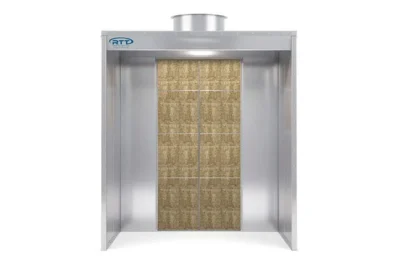
Open Front
- Industrial Paint Booths
Enclosed
- Industrial Paint Booths
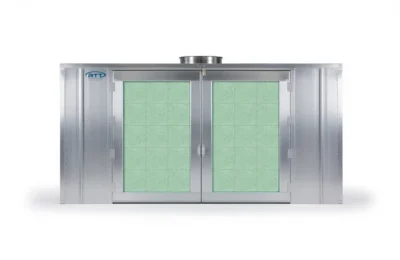
Industrial Exhaust Chamber
- Industrial Paint Booths
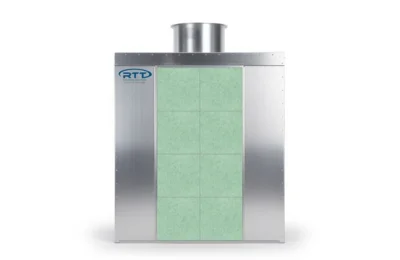
Crossdraft
- Large Equipment Paint Booths
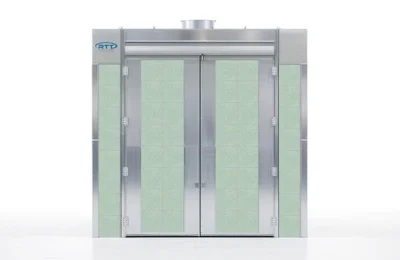
Downdraft
- Large Equipment Paint Booths
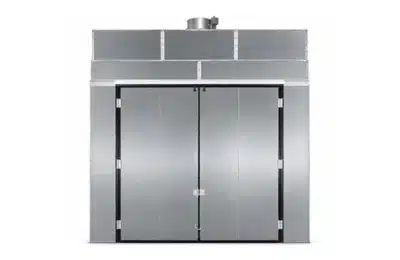
Modified Downdraft
- Large Equipment Paint Booths
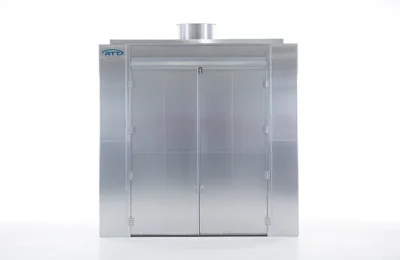
Side Downdraft
- Large Equipment Paint Booths

Insulated Oven Panel
- Accessories

Industrial Paint Mixing Room
- Preparation Equipment
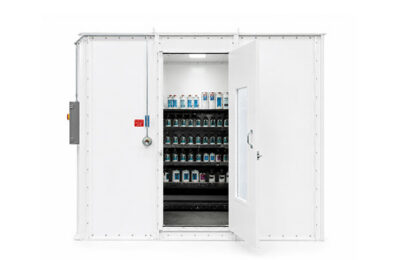
Batch
- Ovens
Process
- Ovens
VHD Batch
- Ovens
Multi-Stage Process Washer
- Preparation Equipment
Wash Booth
- Preparation Equipment

CT Series
- Air Makeup Units
Batch
- Powder Coating Booths
Cartridge Batch
- Powder Coating Booths
Pass Through
- Powder Coating Booths