
External Modified Downdraft Paint Booth – Design Challenge #2

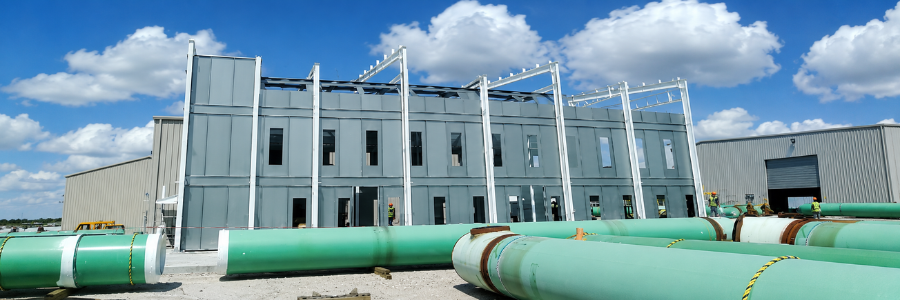
RTT spray booth installation under construction at an industrial facility, featuring a large steel structure, oversized ventilation ductwork in the foreground, and workers on site.

 Design challenge:

The customer, Lindseyca based out of Houston, TX, required an outdoor style modified downdraft paint booth to match the existing buildings. The structure had to be capable of withstanding 139+ mph coast-line winds. The customer did not have floor space inside their building to accommodate the spray booth, so they had to extend.

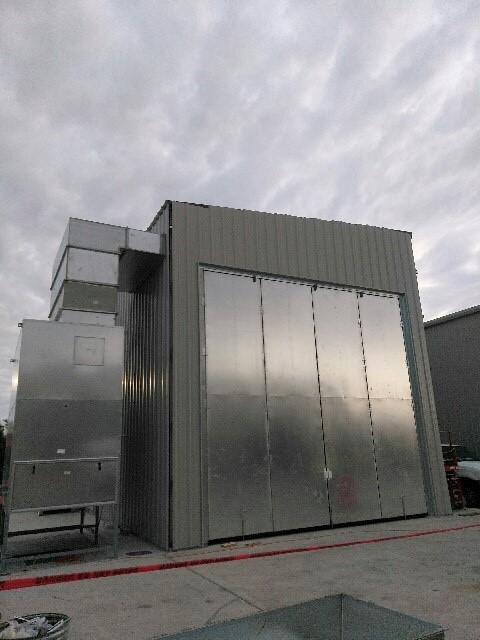
Large RTT spray booth installed outside an industrial facility, featuring tall galvanized access doors, integrated ventilation equipment, and a durable metal enclosure designed for industrial finishing operations.

RTT Solution: Custom 23’w x 20’h x 65’d Pressurized, external Modified Downdraft paint Booth with a Cure Mode

We incorporated our modified down draft paint booth structure with the building structure and created a booth environment in an external building. This Modified Downdraft paint booth featured exceptional lighting and a dual access control room on the side of the booth. The booth’s exterior was color matched to blend with the existing buildings and the customer upgraded to a roll-up door to match the existing doors. It was engineered to withstand coastline winds (class D) of 139+mph and up to a 38 lbs per square foot snow load. No matter where you are located, we can engineer your project or outdoor booth to meet your specifications.
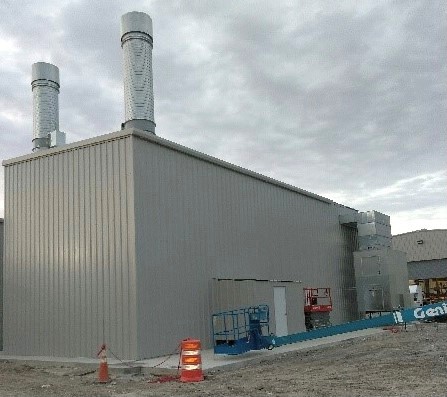
Large RTT spray booth installed outside an industrial facility, featuring tall galvanized access doors, integrated ventilation equipment, and a durable metal enclosure designed for industrial finishing operations.

Why is a spray booth required?

  • A spray booth is needed to confine and evacuate atomized particulate and vapors within a restricted environment.
  • Prevent overspray and volatiles from migrating and causing unsafe conditions or contamination outside of the designated spray area
  • Provide a clean environment in which to paint and minimize contamination in the coated product
  • Prevents a combustible combination of flammable vapors and air
  • Required by OSHA and NFPA

A spray booth consists of:

  • A work area/compartment where spraying takes place
  • An exhaust chamber with filter media for collecting particulate
  • An exhaust fan and motor ducted to the exterior of the building
  • A spray booth can be open face, enclosed, or pressurized


Spray booths are typically designed by the direction of the airflow. 


Crossdraft booths intake air through filters in the product doors. The clean, filtered air is drawn through the booth and exhausted through a filter system at the opposite end.


Downdraft booths take in fresh air from the cleaner upper levels of the shop through a filtered booth ceiling. The filtered air is drawn down and away from the product into the filtered exhaust pit located in the floor.


Side Downdraft booths intake air from the cleaner upper levels of the shop through a filtered booth ceiling. The filtered air is drawn down and away from the product through exhaust filters at the floor level, along both sides.


Modified Downdraft booths intake fresh air from the cleaner upper levels of the shop through a filter bank located in the booth ceiling, near the product doors. The filtered air is drawn down through the booth to an exhaust filter system at the opposite end.

Illustration of a crossdraft paint booth airflow system showing fresh air entering horizontally through the front opening, moving across the work area, and exiting through an exhaust stack located at the rear of the booth. Illustration of a downdraft paint booth airflow system showing clean air entering from the ceiling and moving vertically downward through the work area. Illustration of a modified downdraft paint booth airflow system showing filtered air entering from the front intake area, moving horizontally through the booth, and then being directed toward a rear exhaust chamber. Arrows indicate airflow traveling across the work area before being pulled into the exhaust section and discharged upward through a vertical exhaust stack. Illustration of a side downdraft paint booth airflow system showing clean air entering from the ceiling and moving downward through the spray area. Airflow is directed toward exhaust chambers located along both side walls, where contaminants are captured and exhausted through vertical stacks.

Some quick highlights that we use to design our spray booths that are determined by OSHA and NFPA:

  • Shall not be less than 100 linear feet per minute
  • Electrostatic spraying may not be conducted at not less than 60 linear feet per minute
  • The required airflow velocities range from 50-250 linear foot per minute (FPM) into the openings of a spray booth
  • Dilute solvent vapor to at least 25 percent of the lower explosive limit
  • The concentration of the vapors and mists in the exhaust stream of the ventilation system shall not exceed 25 percent of the lower flammable limit

RTT Standard Designs:

We offer a wide range of standard booths that are pre-engineered, or “-S” booths. These booths have been drawn, detailed, the established customer packet has been set, and can typically be delivered within 10 days of ordering.

Comparison chart of three industrial paint booth construction options—Standard Duty, Heavy Duty, and Xtreme Duty.
RTT Finishing Solutions